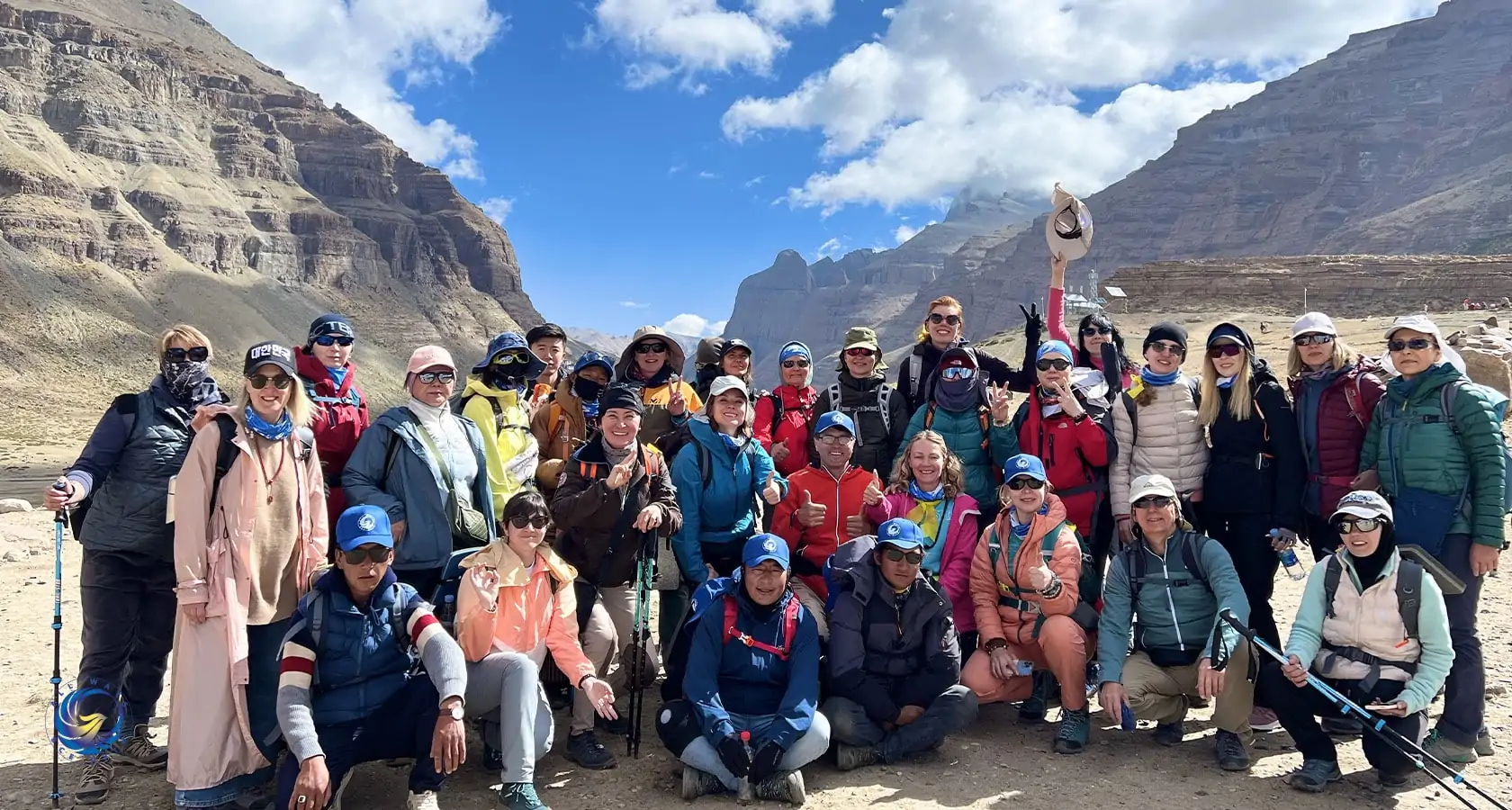
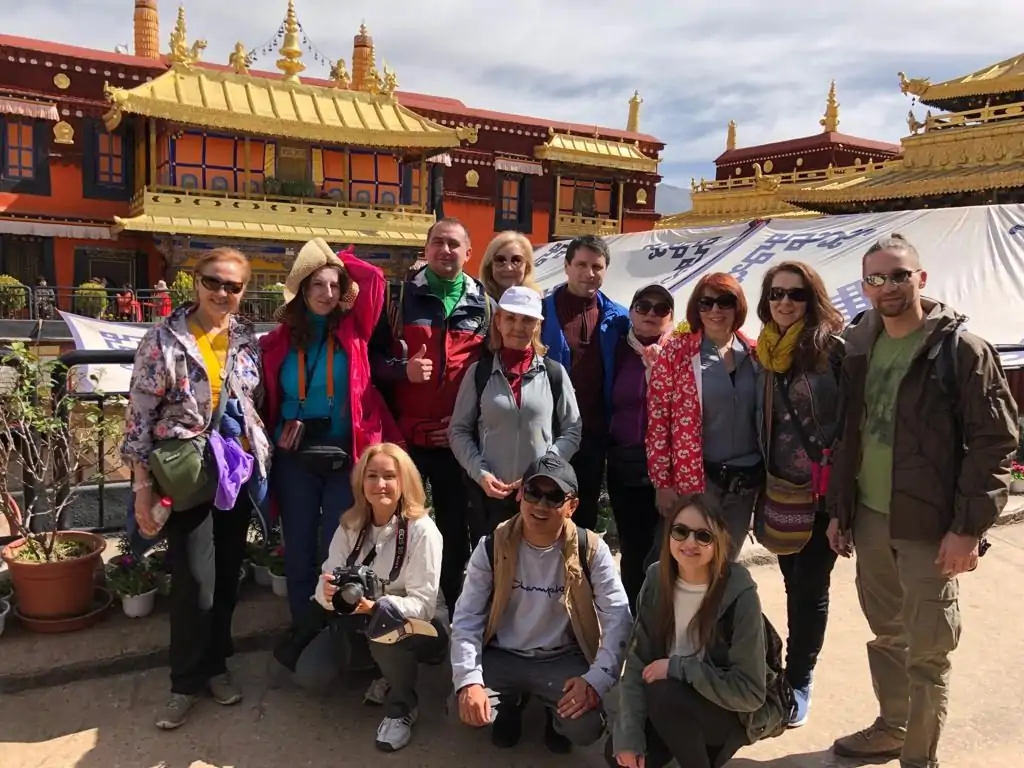
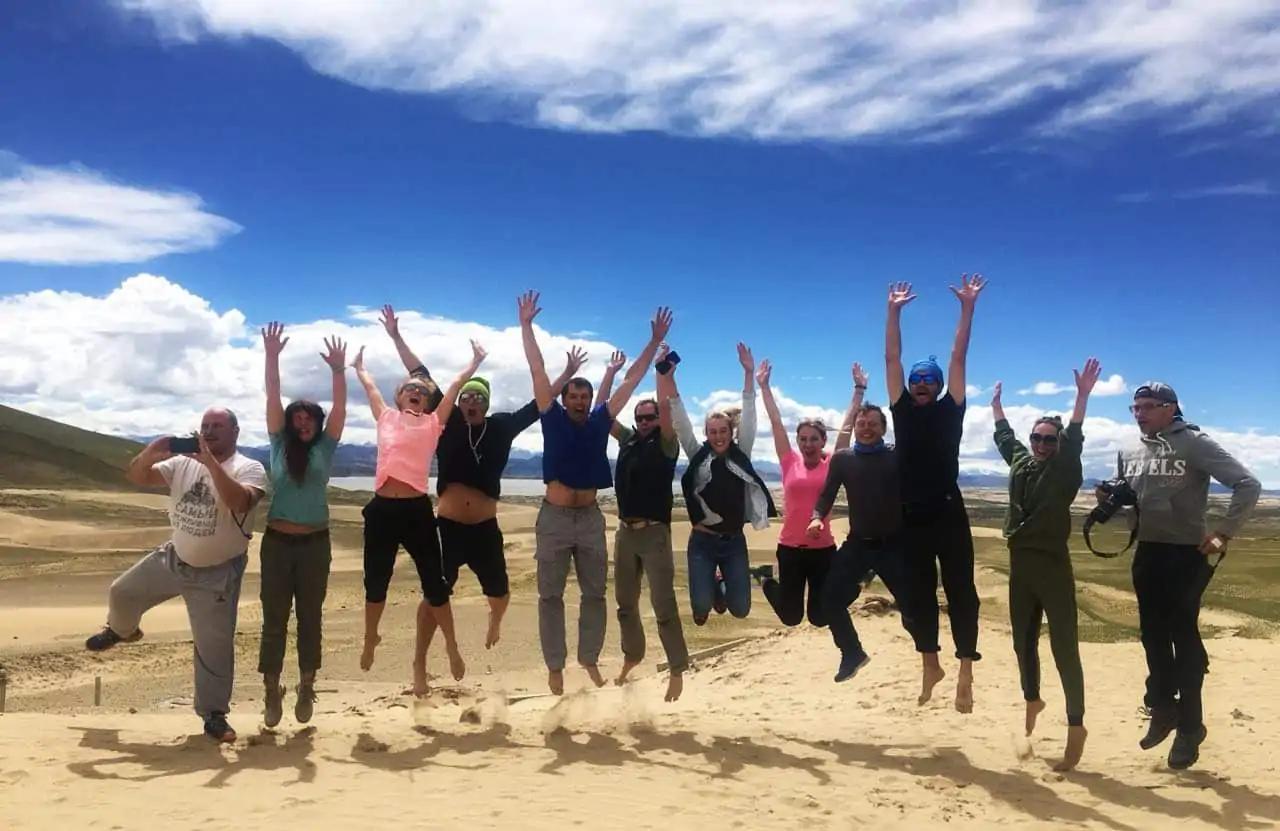
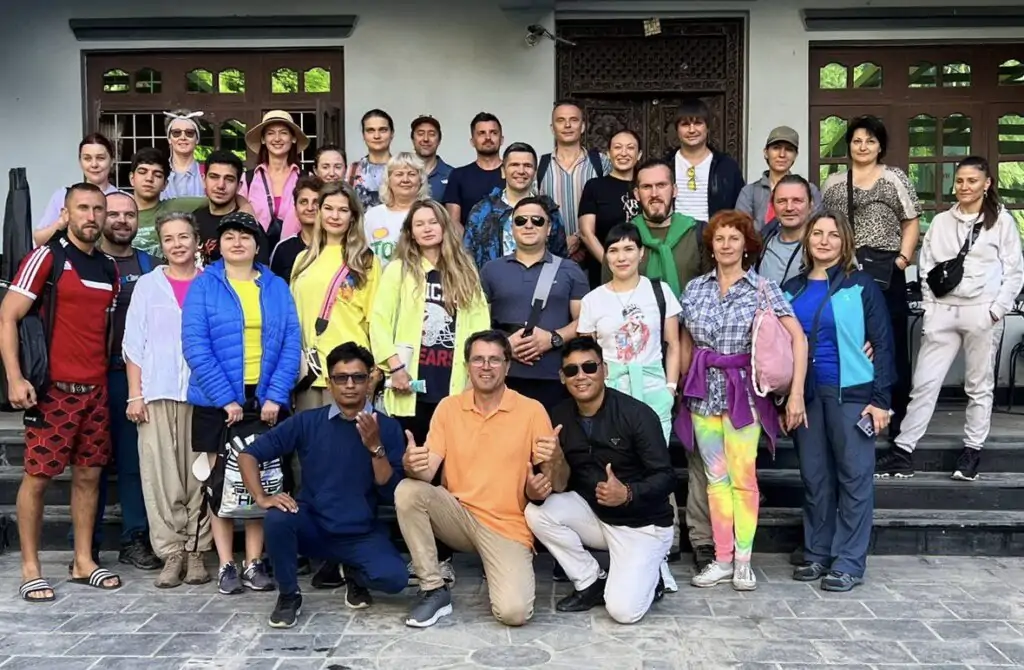
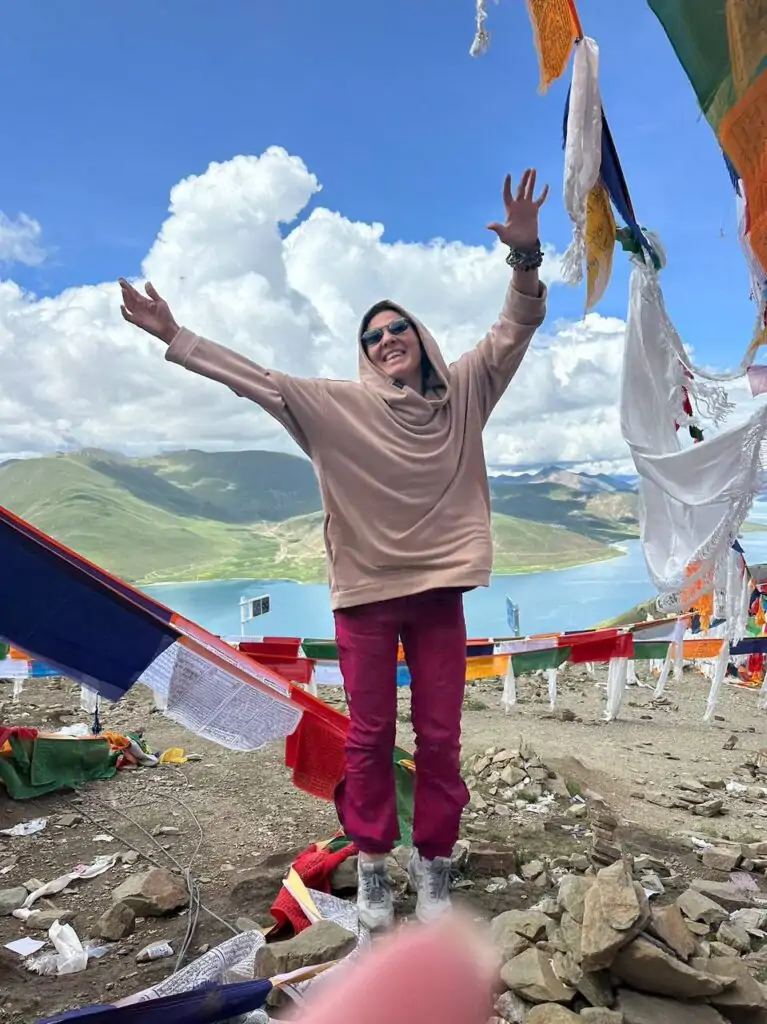
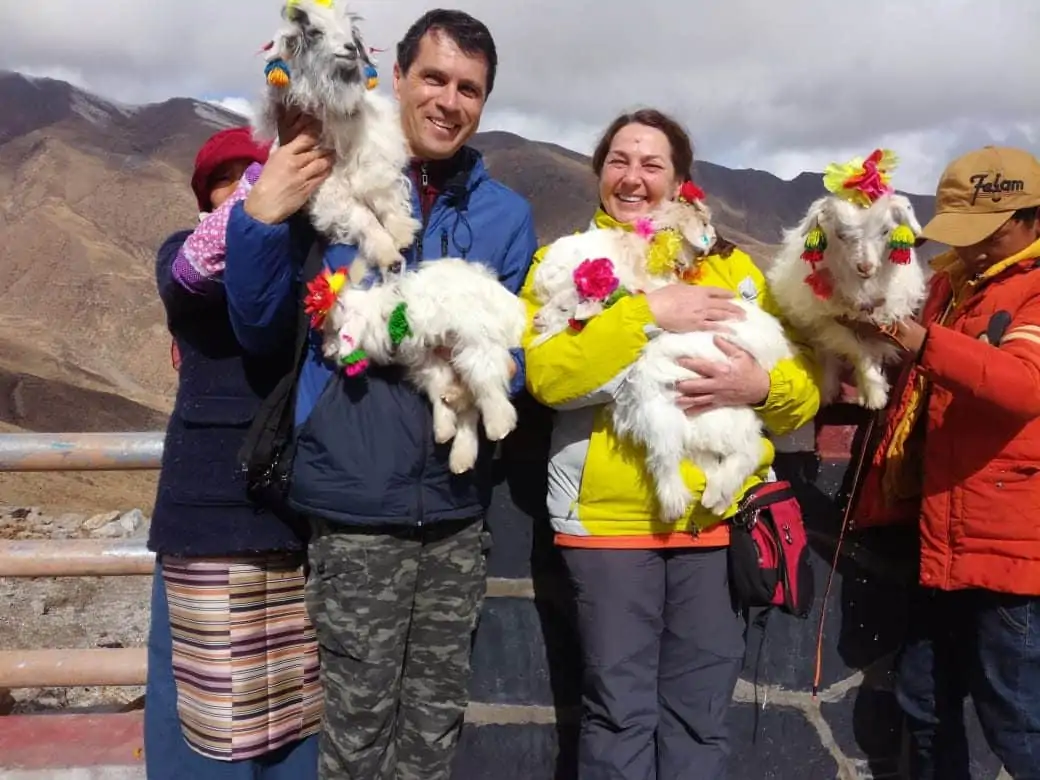
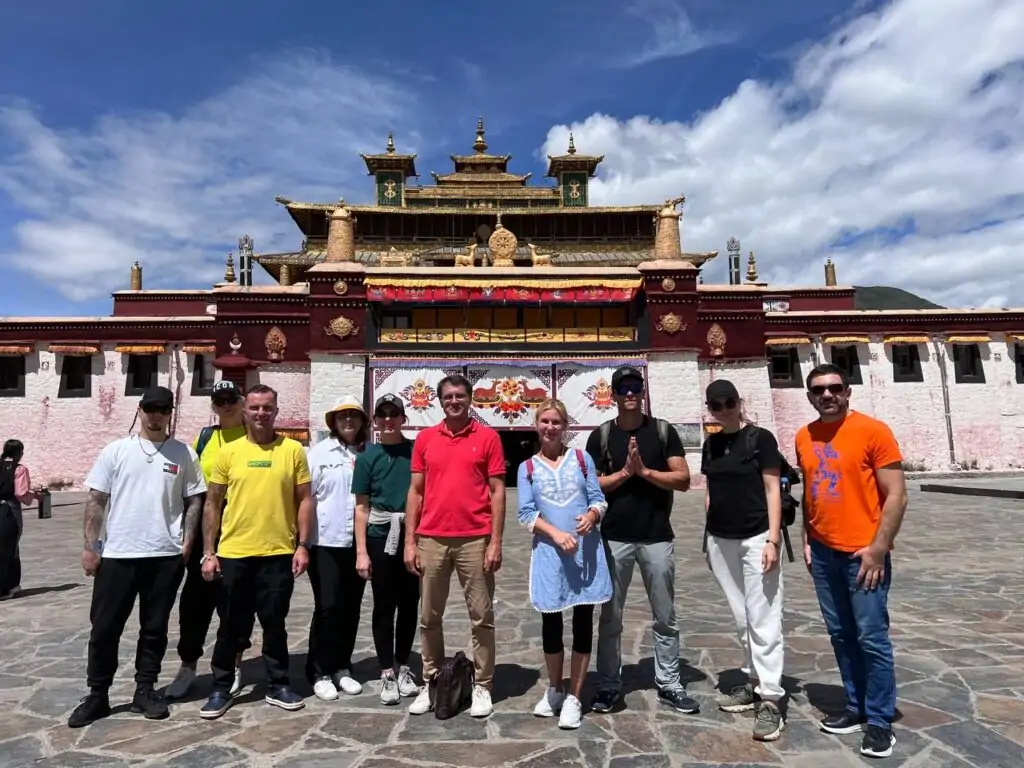
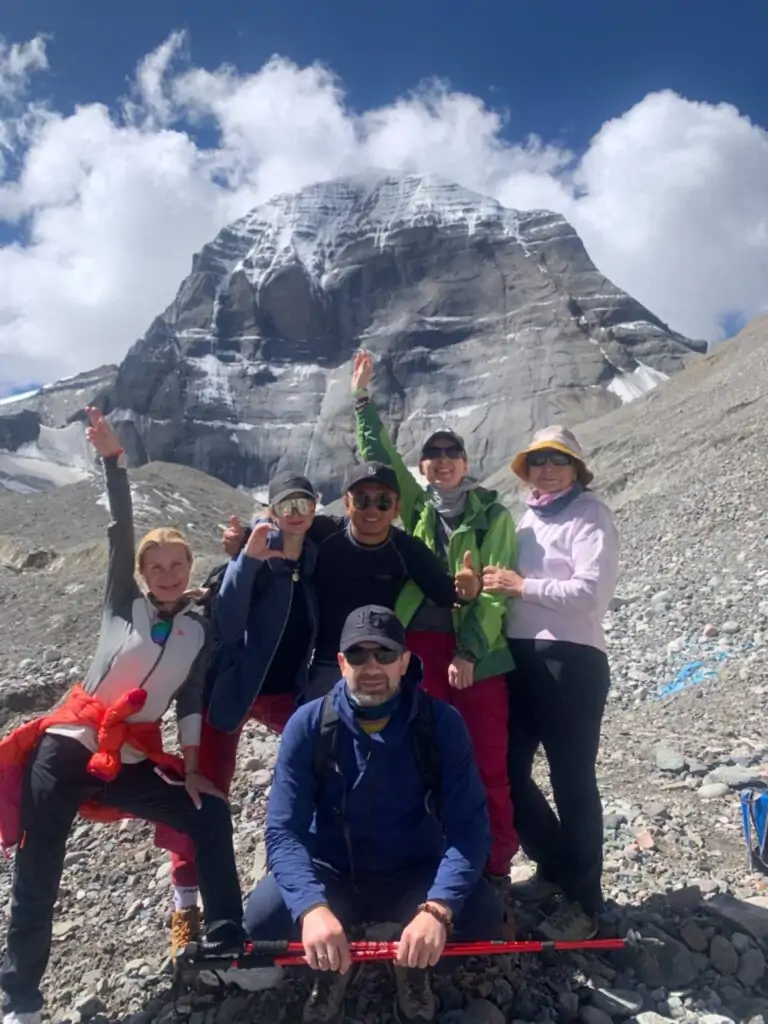
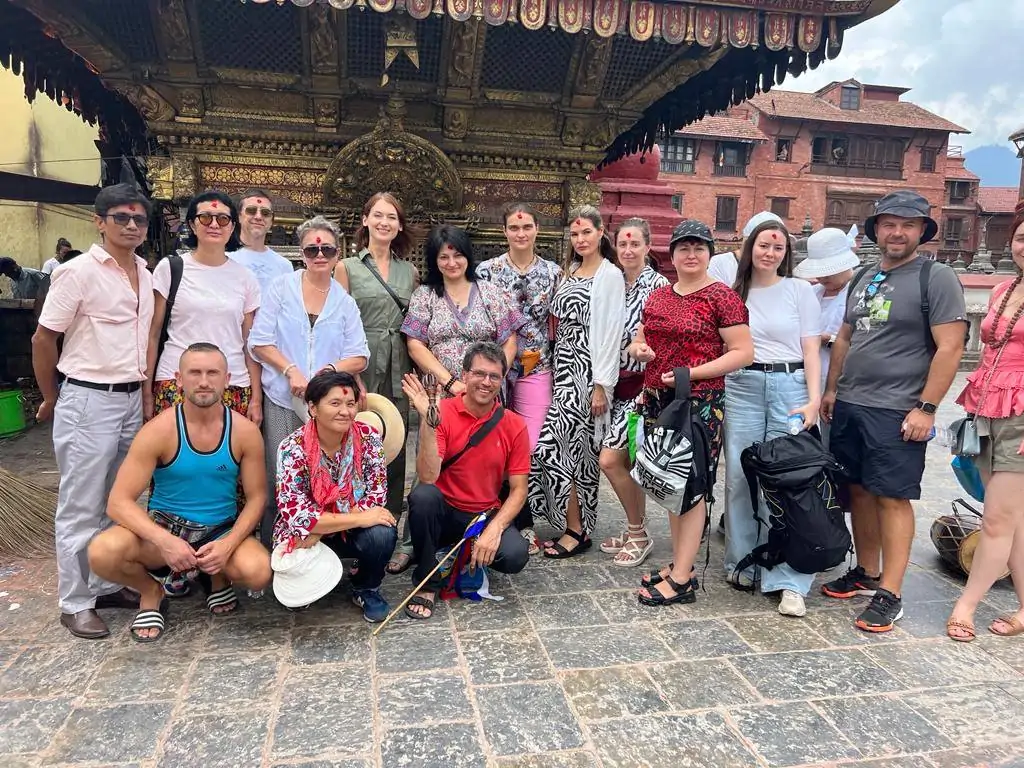
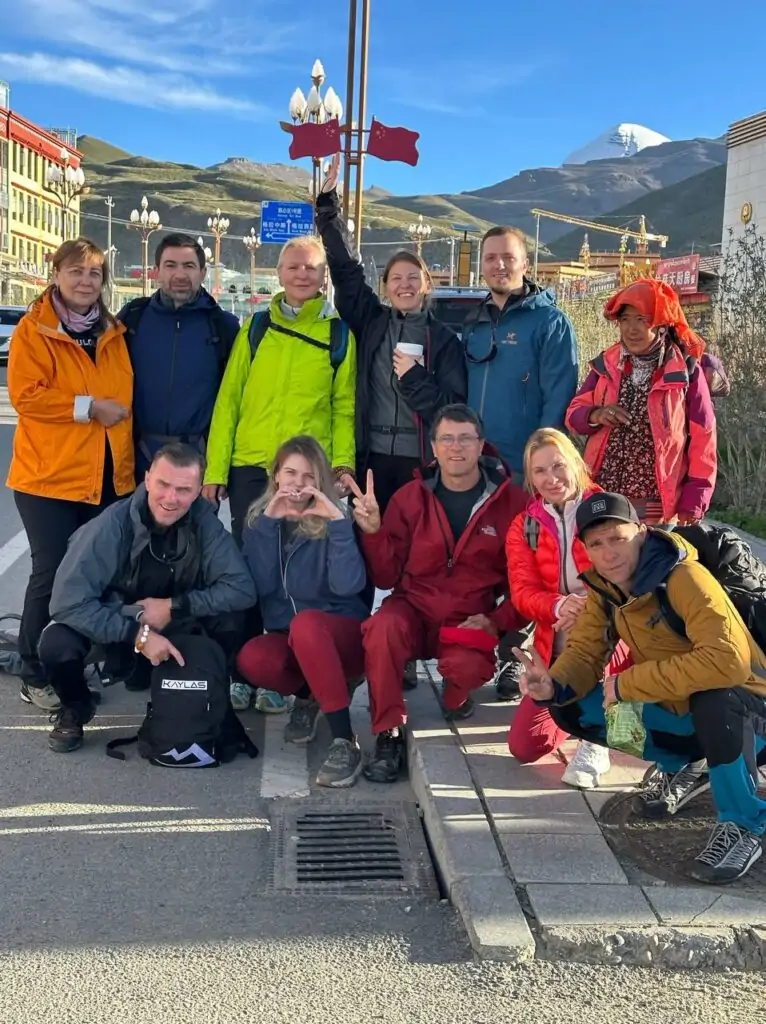
– Our participants have a successful Kora experience: in over 13 years of experience, over 1000 people have made the pilgrimage around the sacred Mount Kailas thanks to our attention to detail and reliable organization.
*Checked routes that allow you to acclimatize competently and feel good at altitudes over 3600 m.
– Tibet’s best certified guides.
– Accompanying the group with an experienced Tibetan Russian-speaking guide.
– Accommodation only in vetted 4-star hotels (where available).
– Travel by comfortable and reliable buses.
– The price already includes sleeping bag, trekking poles, drinking water, tea and oxygen in the bus.
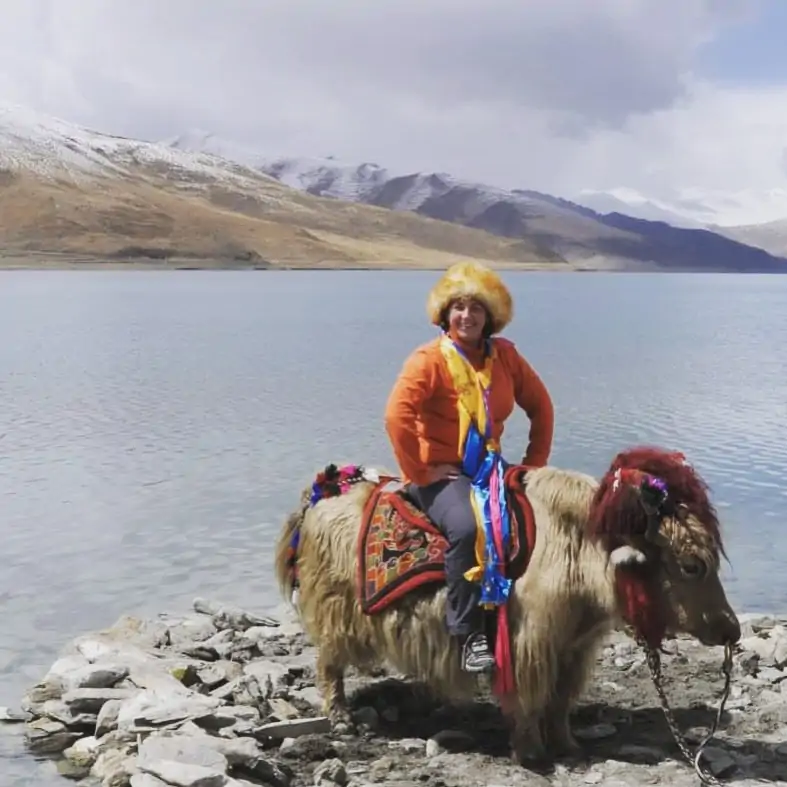
– The services of yaks and porters during the kora are included in the price. You won’t need to carry your belongings behind your back, just the essentials
– Possibility to fly around Cora by helicopter (optional)
-Inner Kora – 1/3 of the way: you can drive the first 6 km of the route by vehicle and spend a few hours near Kailas (optional)
– Accumulative discount system (“Rainbow” – allows our regular customers to save money. Affiliate program – allows you to earn)
– Possibility of payment in installments.
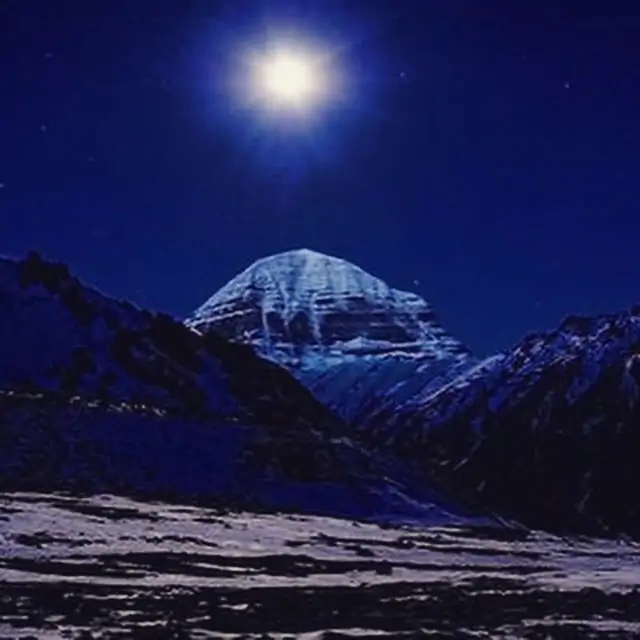
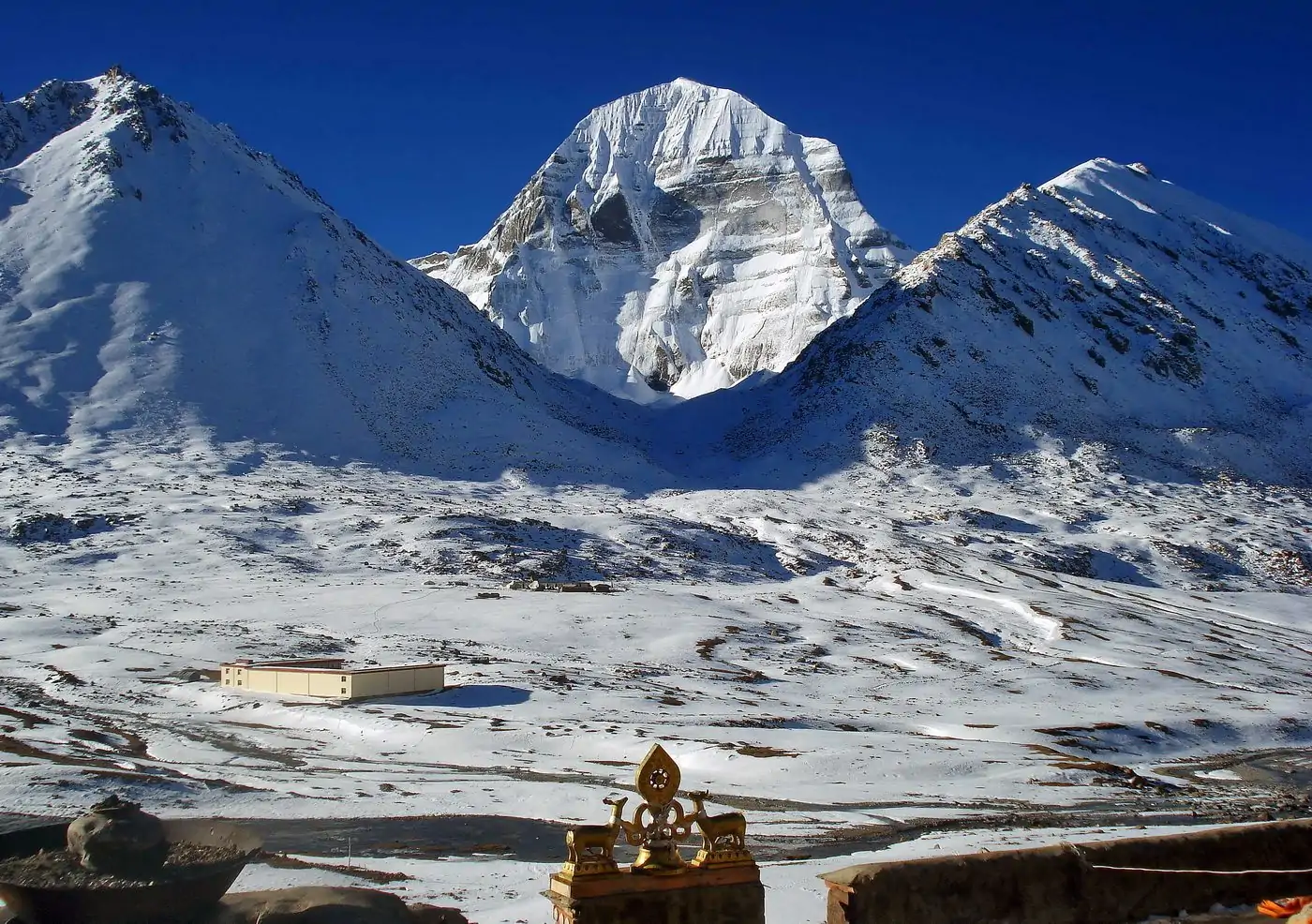
On this journey we will make a kora (kora is a ritual circumambulation) around the mystical Mount Kailas, the strongest place on our planet, the 7th chakra of the Earth.
The year 2026 is a special year for the bark passage around Mt. Kailas!
🔥2026 is the year of the fire horse. This year is considered particularly auspicious for the passage of the bark around Mount Kailas.
One circumambulation of Kailash during the Year of the Horse equates to 13 circumambulations. This means that all the merits and blessings you receive as a result of the pilgrimage are increased by 13 times!
Kailas is believed to be one of the major occult places on earth that accelerates human spiritual development and facilitates connection with conscious beings.
Followers of four world religions consider Kailas a sacred place and make pilgrimages to it. That’s more than 1.2 billion earthlings – 400 million. Buddhists, 820 million. Hindus, 3-5 million. Jainists and about half a million followers of the Bon religion.
Для буддистов Кайлас – обитель Будды Шакьямуни в гневной форме.
Для индуистов – обитель Шивы, бога-разрушителя иллюзий.
Джайны верят, что здесь наступило духовное прозрение их первого пророка – Махавиры.
Бонцы называют гору местом сосредоточения жизненной силы.
Кайлас
Apart from Mount Kailas, this trip will take you to other mystical places in Tibet:
Увидите красивицу-столицу Лхасу
Посетите священные озера Манасаровар, Ракшастал и Ямдрок Цхо.
Побываете в бывшей резиденции Далай Лам многих поколений – во Дворце Потала.
Увидите первую статую Будды, которой 2500 лет и которая исцеляет (в Храме Джокханг).
Посетите другие древние монастыри и ступы, встретитесь с ламами и монахами.
Станете участниками пудж (буддийских служб).
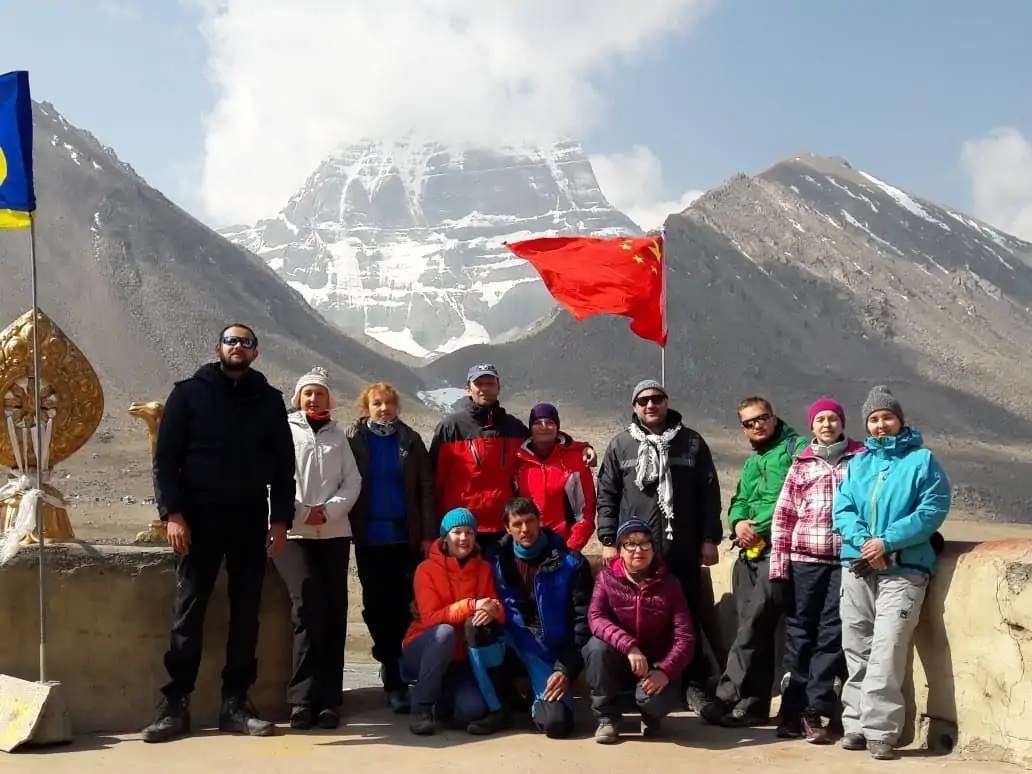
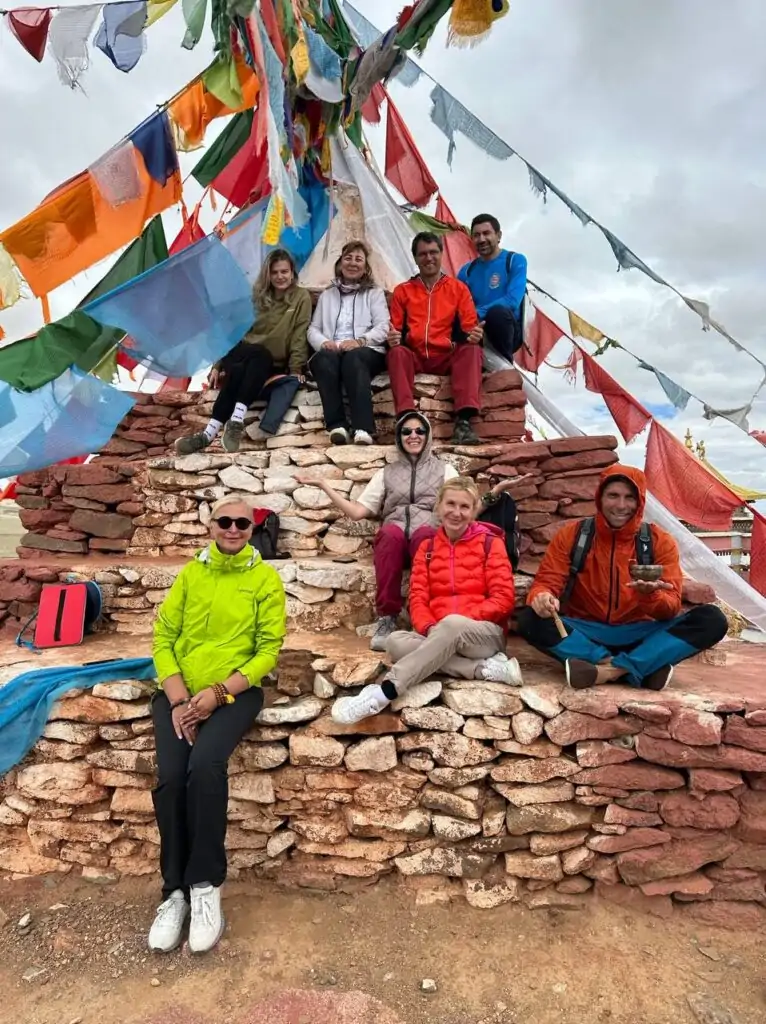
Участники тура перед началом коры вокруг горы Кайлаш, июнь 2024
Мистический Кайлас на майские праздники
Tour dates: October 4 – October 17, 2026 (dates of stay in Tibet, no flight).
Number of days: 14 days / 13 nights in Tibet.
Where to: Tibet (territory of China).
Number of people in the group: Number of people in the group: from 8 to 20.
Where to fly: Lhasa airport, the capital city of Tibet.
What we do: We will make a kora (ritual circumambulation) around Mount Kailas (3 days), visit temples, monasteries. We will see the beautiful capital city of Lhasa.
Accommodation: in 4* hotels (Lhasa, Shigatze, Darchen), 3* hotels (Saga – 2 nights) and guesthouses (during the kora around Kailas, 2 nights).
Difficulty of the trek: Kora around Mount Kailash is a 3-day trek of moderate difficulty, which is accessible to many people with good fitness and prior preparation.
Visa: tourist visa to China + Permit (permission to enter the territory of Tibet) – processed through us. Citizens of Russia, Belarus, Kazakhstan and some other countries do not need to apply for a Chinese visa.
Insurance: standard medical insurance for traveling abroad.
Tour cost: $3,200 for early booking. 2950$ at group booking. More detailed cost of the tour is shown after the tour program.
The group is accompanied by: an experienced Tibetan Russian-speaking guide.
Organizer: Travellers’ Club “All Ways”.
Pre-registration for the group: on WhatsApp +1 530 8440836.
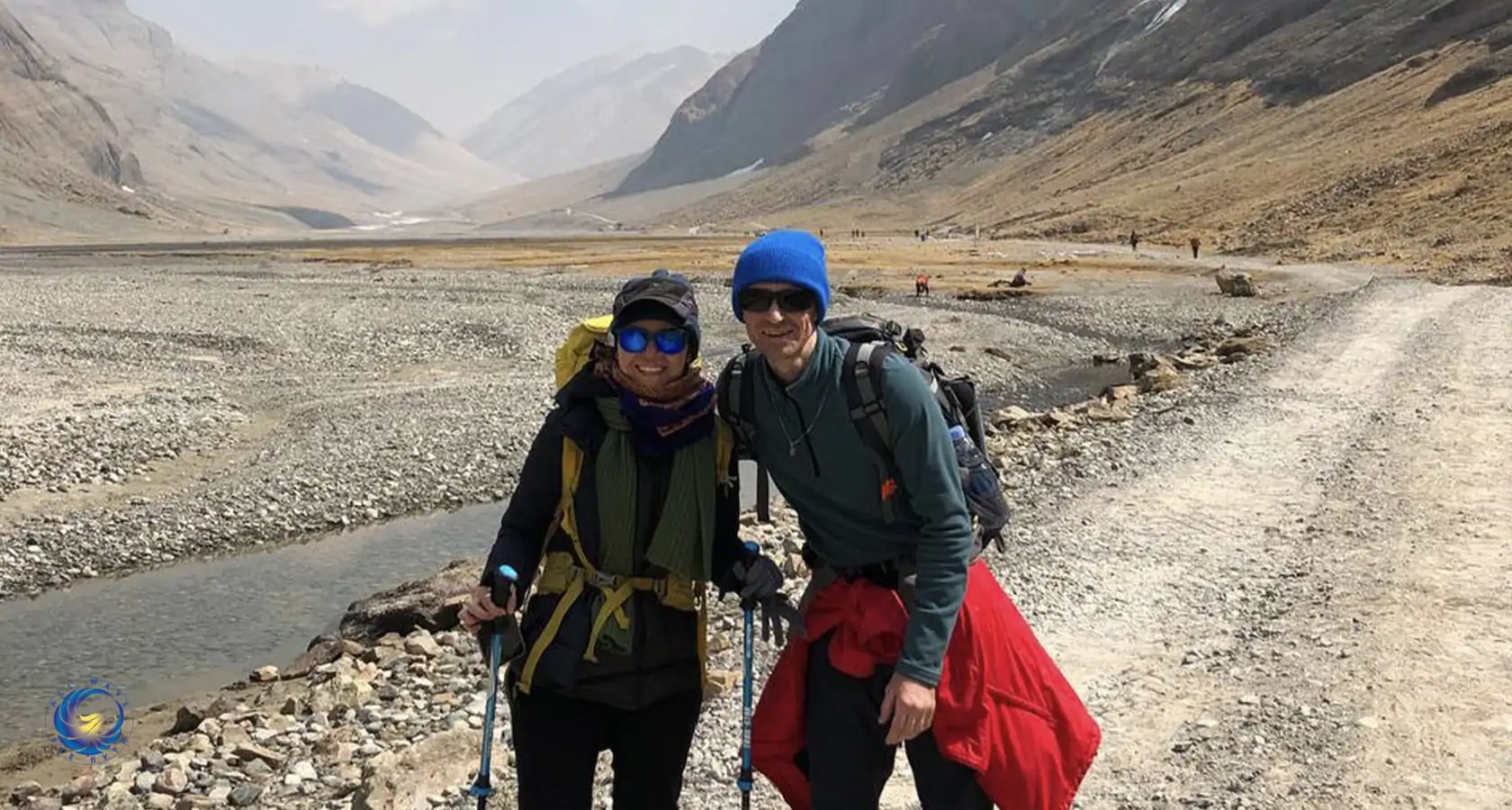
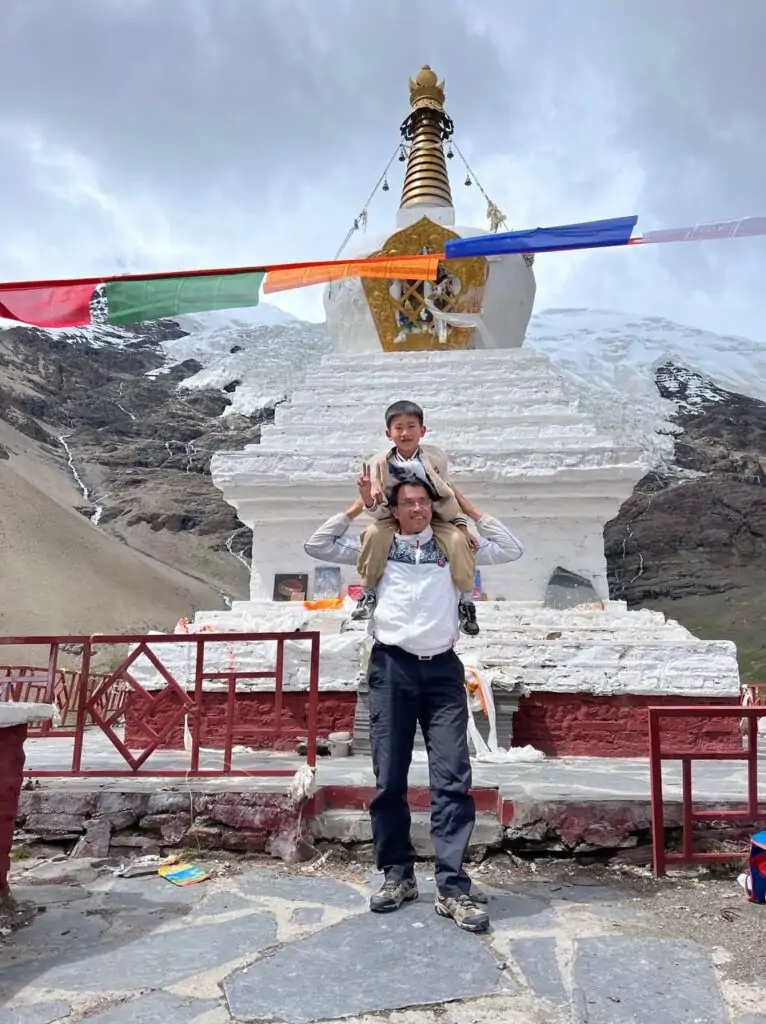
Участники тура у ледника Карола на пути к Кайласу
Мистический Кайлас на майские праздники
Route
Lhasa - the capital of Tibet (3650 m)
Shigatze (3845 m)
Saga (4640 m)
Darchen (4576 m)
Sacred lakes Manasarovar and Rakshastal (4590 m)
Kailas - the bark around the mountain (3 days) (4576 to 5669 m)
Darchen (4576 m)
Saga (4640 m)
Shigatze (3845 m)
Lhasa - the capital of Tibet (3650 m)
October 4, 2026, Sunday. Arrival in Lhasa, the capital of Tibet. Acclimatization and familiarization
Meet at the airport in Lhasa, the capital of Tibet (3650 meters above sea level). Transfer to the hotel. A scenic road from the airport to the city with high mountain scenery and views of Tibetan villages, as well as views of the Yalutsangbu River. The drive will take about an hour.
Rest after the flight.
If you arrive early, you can visit the Buddhist monasteries near the hotel:
Green Tara Women’s Monastery.
The Temple of the Three Defenders.
Walk along the historic Barkhor Street around Jokhang Temple – it is a holy place and here you can make kora with the pilgrims.
Overnight in a 4* hotel in Lhasa.
A local monk in Lhasa
Walking the streets of Lhasa around Jokang
Day 2
October 5, 2026, Monday. Lhasa Attractions. Potala Palace, Jokang Temple.
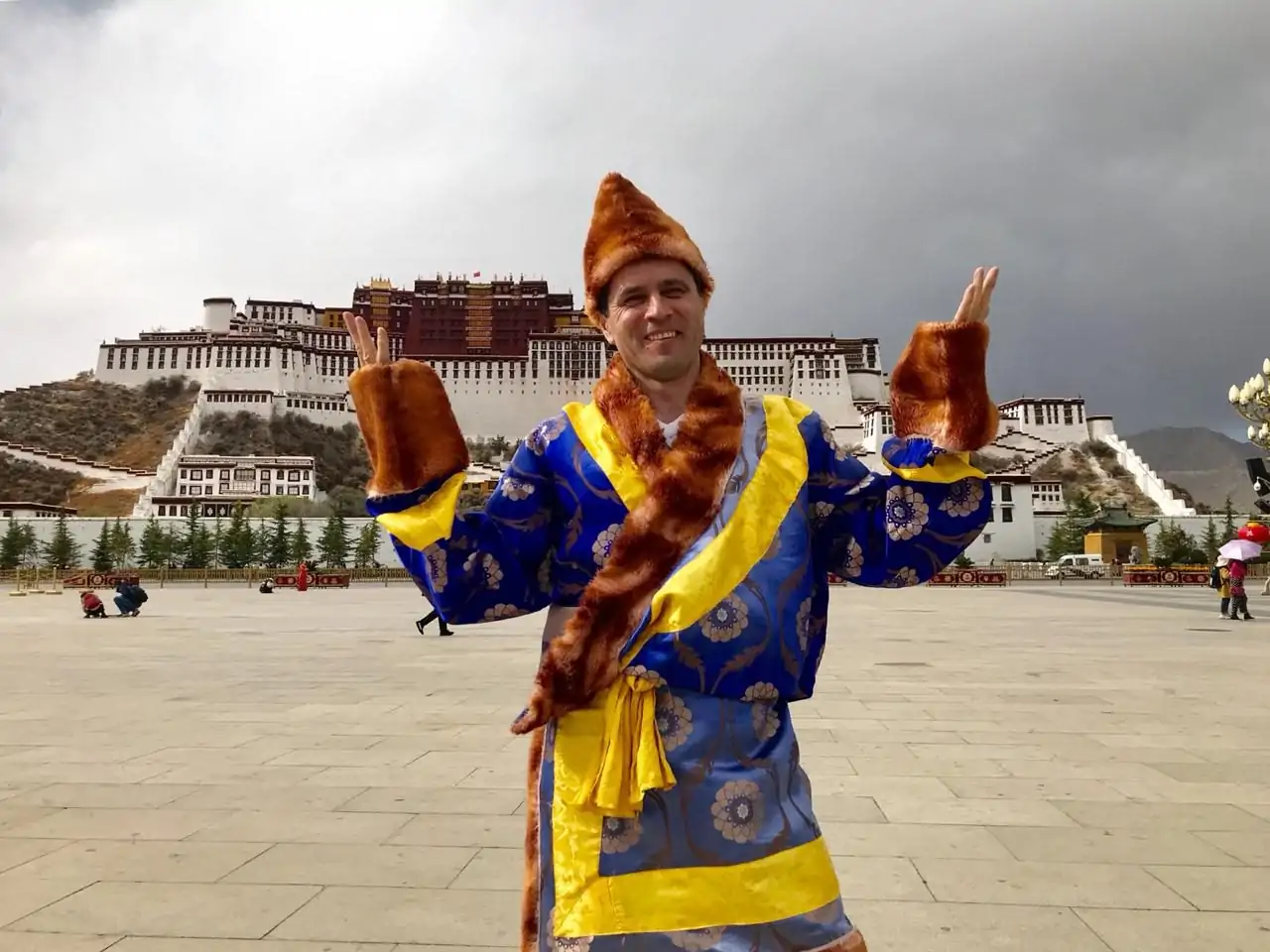
After breakfast: visit to Potala Palace, the winter palace of the Dalai Lamas for many generations. It is a palace and Buddhist temple complex. The palace was built from 641 AD to the 17th century. The palace has 999 luxurious rooms. From here you can enjoy a beautiful panorama of Lhasa. The Potala is the historical, architectural, political and religious center of Tibet. The magnificent halls of the Red and White Palaces, many stupas, and the covered terraces of the Dalai Lama’s residence are breathtaking in their architecture. On the territory of the palace in the Phakpa Lhakhang temple there is a sacred for Buddhists statue of Avalokiteshvara. It also houses the Dalai Lama’s personal monastery, religious school, monks’ cells, treasury and store rooms.
Visit to the most sacred temple of Lhasa – Jokang (17th century). Pilgrims from all over Tibet come here to worship the sacred statue of Shakyamuni Buddha, brought to Lhasa in the 10th century. This is the very first statue of Buddha (Jowo Shakyamuni), which is 2500 years old. It was consecrated by the Buddha himself.
The temple has 14 separate prayer rooms dedicated to Tsongkhapa, the founder of the Gelug-ba sect, Avalokiteshvara (one of the main manifestations of Buddha), and the famous teacher (guru) Lama Rinpoche. Pilgrims stretch out in front of Jokang Temple.
Miracles happen in this temple! The Buddha statue heals people and fulfills innermost wishes. Dr. Myasnikov shared the story of his life after visiting the Temple: “While visiting the temple, my wife put a little money in front of the Buddha and asked for health and good luck for her son. The next morning (!!!!) she calls me and silently shows me her leg. The ulcers had all healed overnight! I am well aware that this just can’t happen! And when in 2 weeks we landed in Moscow, and my son still on the plane turned on his phone, the first e-mail was from the Sorbonne: “we have fallen out of one of the applicants, and you are next in line. We’ve accepted you!”.
Walking with pilgrims along Barkhor Street, exploring the old market.
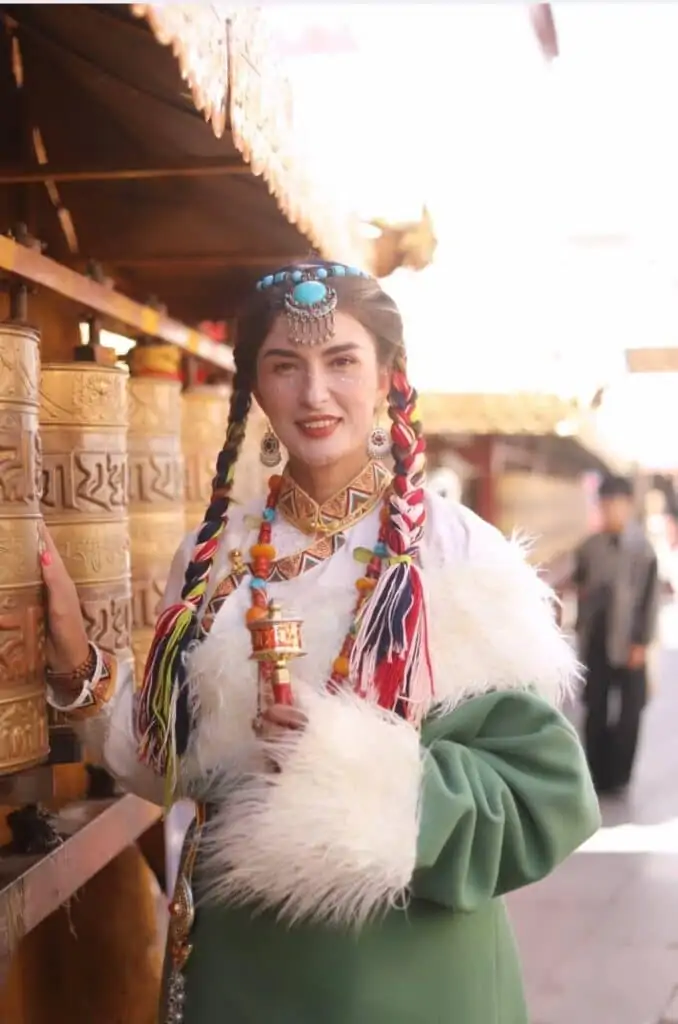
Those who wish can have a professional costume photo shoot on the historic street (400 yuan for makeup, hair, costume and photo shoot). Overnight in a 4* hotel in Lhasa.
Costume photo shoot
Day 3
October 6, 2026, Tuesday. Lhasa and the surrounding area.
Drak Yerpa Cave Complex. Dalai Lam’s summer residence – Norbulinka Park
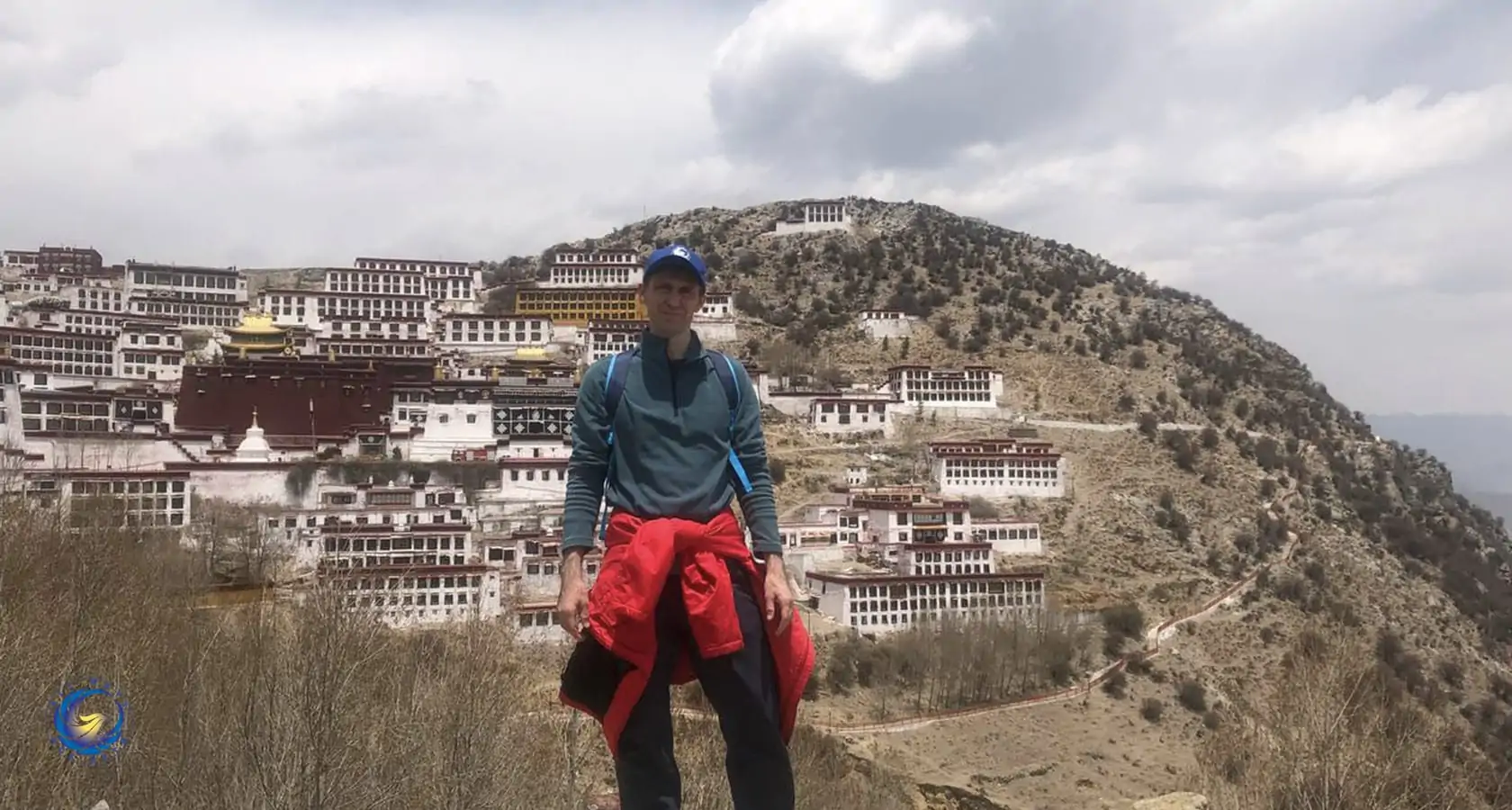
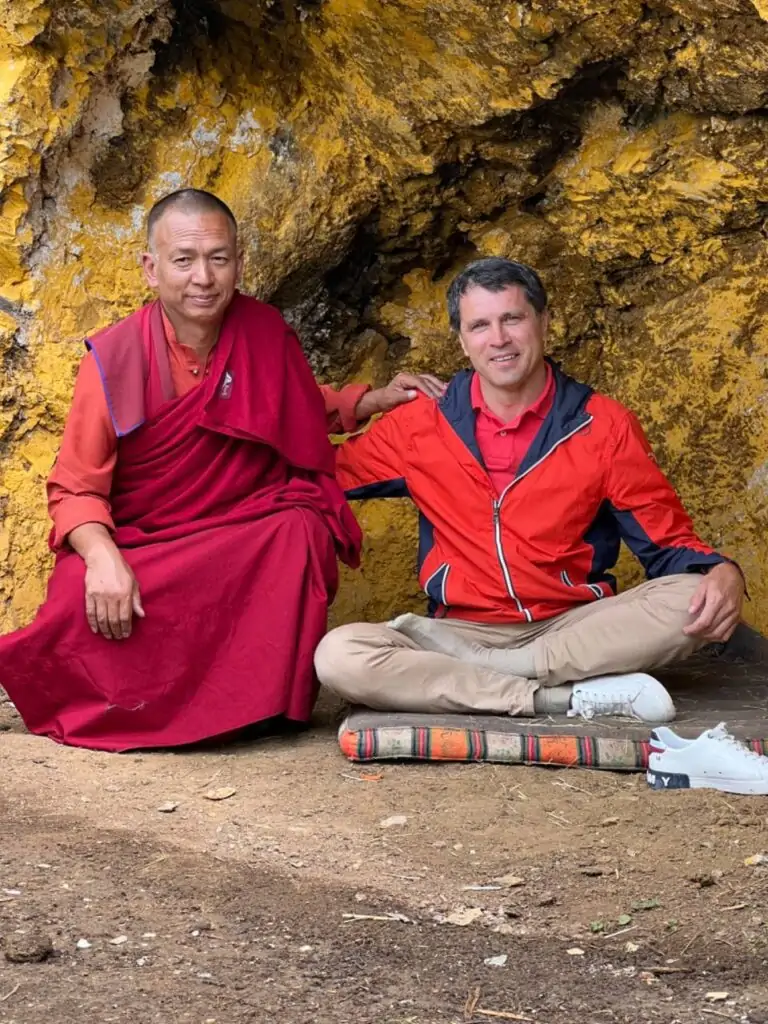
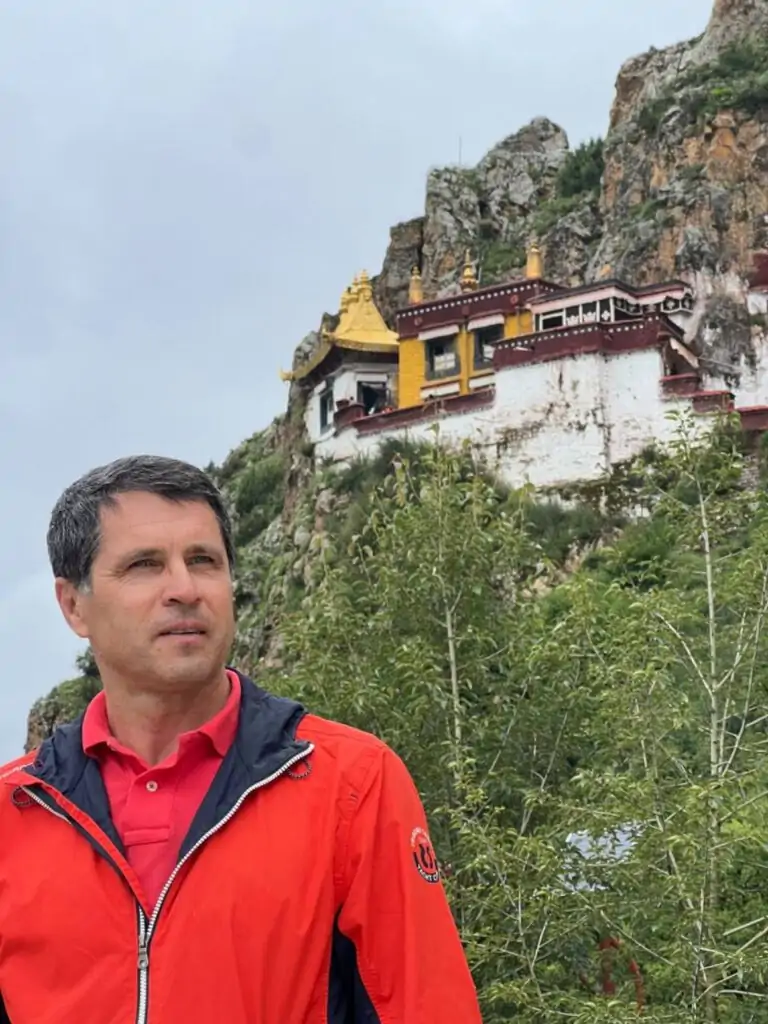
Drak Yerpa cave complex, is located 35 km from Lhasa (4885 m). It is also home to the Drak Yerpa Monastery, founded in the 12th century. It was here that the most famous teachers of Tibet – Guru Rinpoche (Padmasambhava) and Atisha, as well as the king of Tibet – Songtsen Gampo – spent years in meditation. The monastery was also the summer residence of the Gyuto Tantric College. It is one of the three most important monasteries of the Gelug lineage honoring Maitreya Buddha (Buddha of the Future).
Drak Yerpa Cave Complex
Prayer drums at Drak Yerpa.
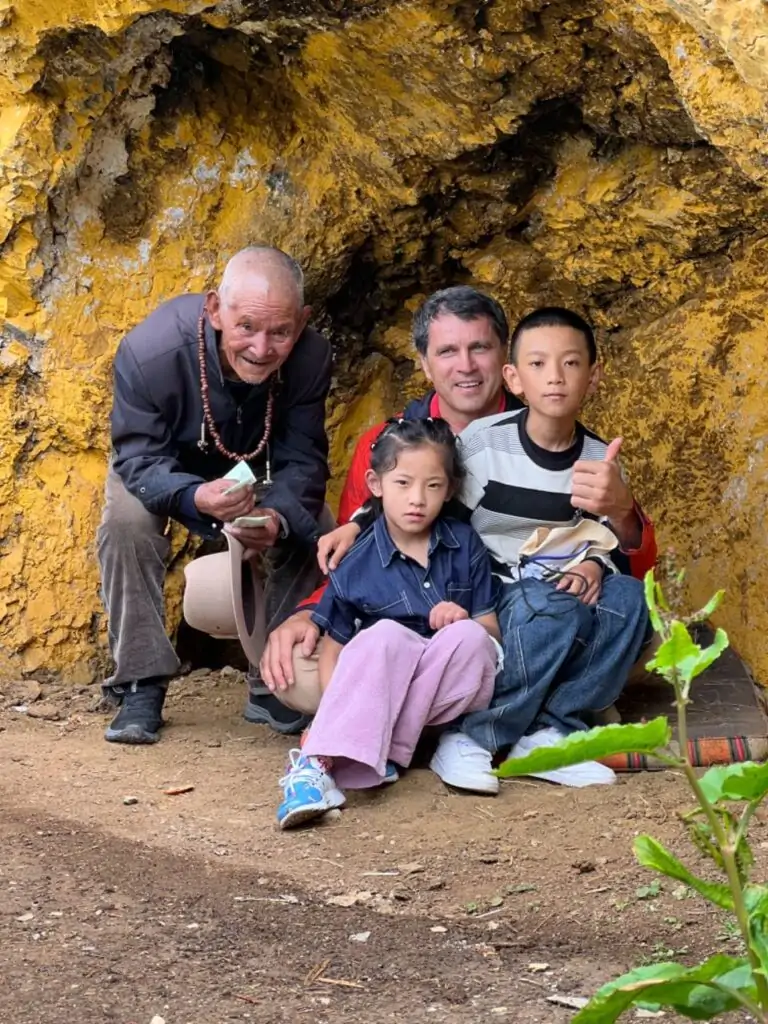
Meditation at the Drak Yerpa Cave.
After lunch we will walk around the summer residence of the Dalai Lamas – Norbulinka Park. There used to be a healing spring in the place of the present Norbulinka Park. The 7th Dalai Lama Gesang Gyaltsu (1708-1757), who was characterized by poor health, came to bathe in the spring every year in summer. Thus was the beginning of the construction of the park. The park covers an area of 3600 thousand square meters. – It is the largest and highest artificial park in the world and is included in the UNESCO World Cultural Heritage List.
Overnight in a 4* hotel in Lhasa.
Walking around the summer residence of the Dalai Lamas – Norbulinka Park
Guided tour in Norbulinka Park
Day 4
October 7, 2026, Wednesday. Transfer to Shigatze.
The sacred lake of Yamdrok Tsho. Carola Glacier. Pelkhor Chode Monastery. Kumbum Stupa
Today we will drive on one of the most beautiful roads in the world!
Along the way we will see one of the three Great Lakes of Tibet, Yamdrok Tsho. The high-altitude lake is located at an altitude of 4,488 meters. It is known for its mystical properties, predictions and magic. We’ll see the Carola Glacier.
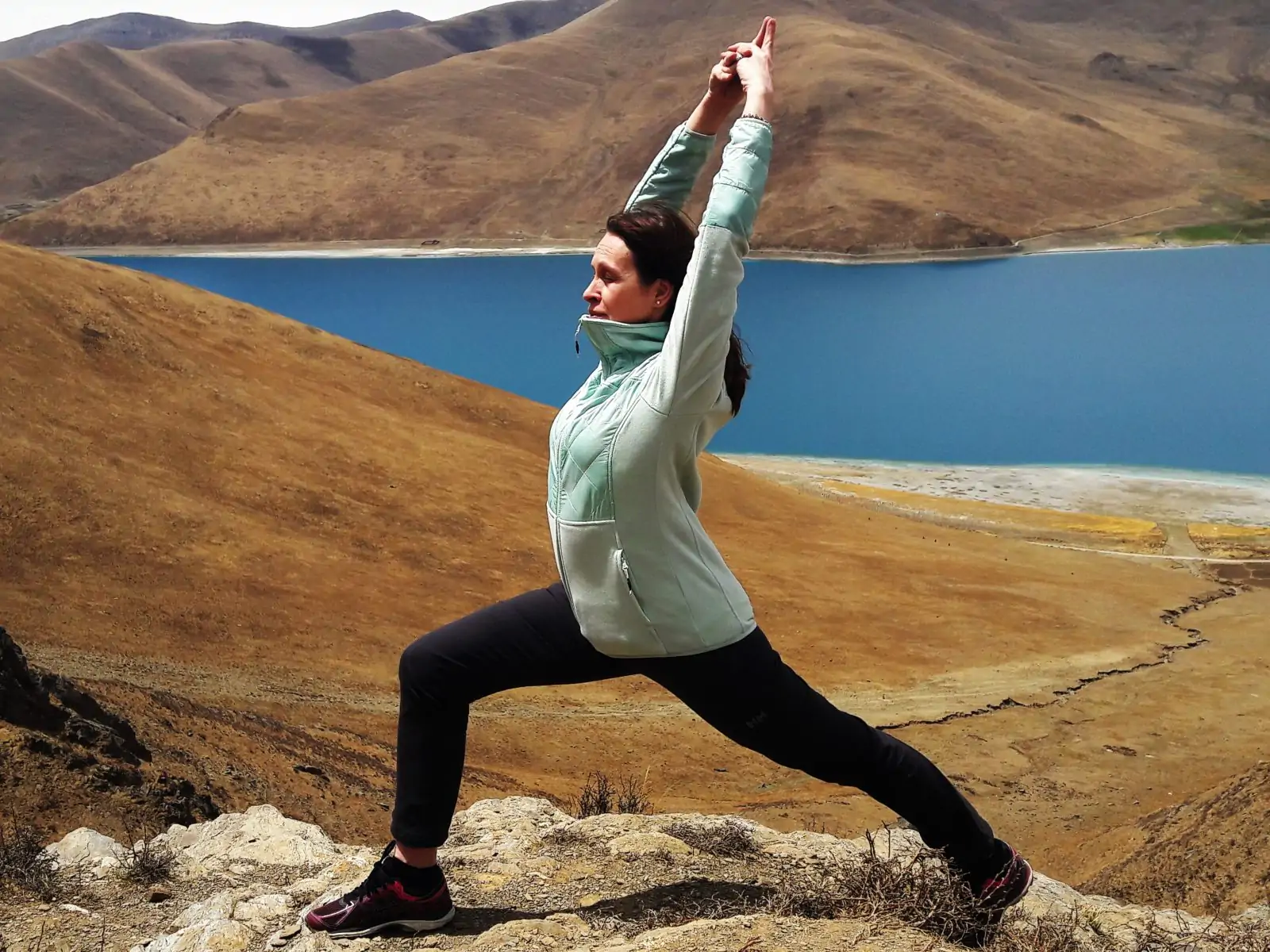
Yamdrok Tso Lake
Karola Glacier
Karola Glacier
On the way, in Gyantse, we will visit Pelkhor Chode Monastery. Pelkhor Chode Monastery was a complex of 15 monasteries of three different traditions, which in itself is a rarity in Tibetan Buddhism. 9 of the monasteries belonged to Gelug, 3 to Sakya and 3 to the few Bona tradition.
It is also home to the largest stupa in Central Tibet, Kumbum. It has five floors, many rooms, statues and altars. “Kumbum” means “thousand” as there are 1000 images of Buddhas, deities and bodhisattvas. As for the statues, most of them were damaged during the Chinese Cultural Revolution but have now been restored.
The largest stupa in Central Tibet is the Kumbum stupa
Kumbum Stupa
We will also see the outside of the ancient fort, built back in the 14th century. The fort is located in the center of the city and spectacularly crowns a rocky hill several hundred meters high. It was designed as a major defensive fortification on the road leading to Lhasa from the south. Numerous white stone buildings still make an impressive impression: high (5-8 m) and thick (up to 4 m) walls, powerful fortifications, massive buildings.
Overnight in Shigatze in a 4* hotel.
Day 5
October 8, 2026, Thursday. Tashilunpo Monastery. Moving to Saga
In the morning after breakfast, we will visit Tashilunpo Monasterywhere the Panchen Lamas used to live in earlier centuries. The monastery, which belongs to the Gelug school, currently has about 800 monks studying. The tombs of all the Panchen Lamas and the 13th Dalai Lama are preserved on the temple complex. The main temple houses an ancient statue of the Future Buddha Maitreya, 26 meters high.
Tashilunpo Monastery
In the afternoon we will be transferred to Saga. On the way we will see the beautiful Peiku Tso Lake and a view of another “smallest eight thousand meter peak” – Shishabangma (8027m). In addition, we will be accompanied by stunning views of the Main Himalayan Range almost all the way.
Overnight in a 3* hotel in Saga (4640 m).
Stunning Tibetan views along the wayMountains of Tibet
Day 6
October 9, 2026, Friday. Moving from Saga to Darcen
On the way we will see stunning views of the Himalayan range and the Saga valley. We will see beautiful meadows and local villages, drive over Mayomla pass (5112m), see Naimonanji mountain (7694m), drive past the sacred Manasarovar lake.
Overnight in a 4* hotel in Darcena.
Lake Manasarovar
Day 7
October 10, 2026, Saturday. Lakes Manasarovar and Rakshastal. Visit to Chiu Monastery
After breakfast, transfer to Rakshastal Lake , the “demonic lake”. According to legend, a demon meditated for ten days near this very body of water. The ten-headed Ravana cut off one head every day and threw it to Shiva. When the demon had one, last head left, the god Shiva softened his anger and gave the petitioner the power he craved. There is another tale. According to legend, the demon meditated by the dead lake for ten days waiting for the coveted Parvati. But Shiva’s wife never lavished the unfortunate demon with her attention. She didn’t show up.
Tibetans don’t like to stop by this lake – a bit afraid of the place. Nevertheless, it is very beautiful.
Lake Rakshastal
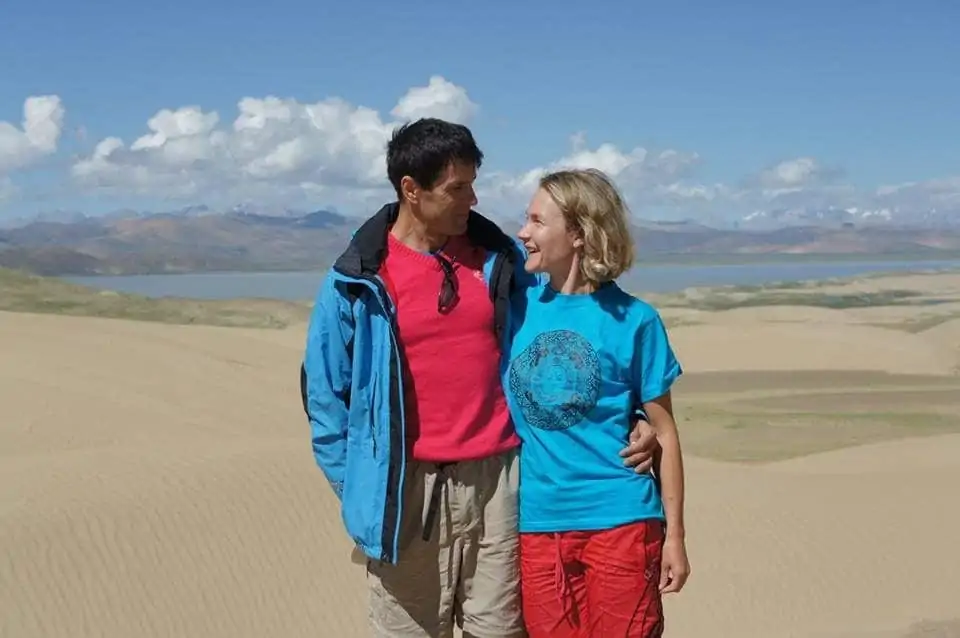
After visiting Rakshastal Lake, we will drive to the sacred Lake Manasarovar (4557 meters), a lake with “living water”. Here you can meditate on the shore of a lake overlooking Mount Kailash, and tune in for a 3-day mountain circumambulation (kora). Lake Manasarovar is mentioned in the Indian epic Ramayana. Hindus believe that Manasarovar is the soul of the god Brahma. Shiva and his wife Parvati are believed to have washed themselves here. Another legend says that Lake Manasarovar was the first earthly creation that Brahma created in his mind. Buddhists believe that Manasarovar is the legendary lake where the gods carried the Buddha after birth to wash him.
Tour participants at Lake ManasarovarVladimir pitches at Lake Manasarovar
On Lake Manasarovar is the Chiu (“bird”) Monastery, which sits on either side of a cliff overlooking Lake Manasarovar.
The monastery is built over the cave of Padmasambhava (Guru Rinpoche, the teacher who brought Buddhism to Tibet in the 8th century). The Precious Master spent three years in meditation in the cave and, according to one version, realized a rainbow body in it. It also houses a lifetime sculpture of Chomdente Buddha.
Return to Darcen. Bark preparation.
Overnight in a 4* hotel in Darcena.
Chiu MonasteryTour participants at Chiu Monastery overlooking Kailas
Day 8
October 11, 2026, Sunday. The first day of the bark around Mt. Kailas
Trekking 18 km. Ascent to an altitude of about 5000 m.
Itinerary:
Tarboche.
Chuku Gompa Monastery.
Lucky Stone House.
The western face of Kailasa.
Dirapuk Monastery.
The North Face of Kailas.
The spiritual meaning of the journey: On the first day of the kora, at the White Stupa, the symbolic new life of our soul begins. It is as if we are being born again, acquiring a new symbolic body.
Overnight at the guesthouse.
The beginning of the crust around Mt. KailashBeginning of the first day of the bark around KailashLocal Tibetans on the bark
Tour participant at the southwestern face of Kailash
Tour participants at the North Face of Kailash on the first day of the kora
The North Face of Kailas
Day 9
October 12, 2026, Monday. Day 2 of the bark around Kailas
The way is 22 km. The trek takes 7-11 h. Ascent to the height of 5630 m.
Itinerary:
Dirapuk Monastery, past Death Valley.
Shivatsal Cemetery.
Green Tare Pass.
Lake Gaurikund.
Axe of karma.
Zutulpuk Monastery.
The spiritual meaning of the journey: On the second day of the kora, our soul lives through symbolic maturity, old age, death, bardo (the intermediate stage between death and birth) and new birth. This day is hard physically. The path of the second day starts from Dhirapuk Monastery at an altitude of 5000 meters.
Dirapuk Monastery
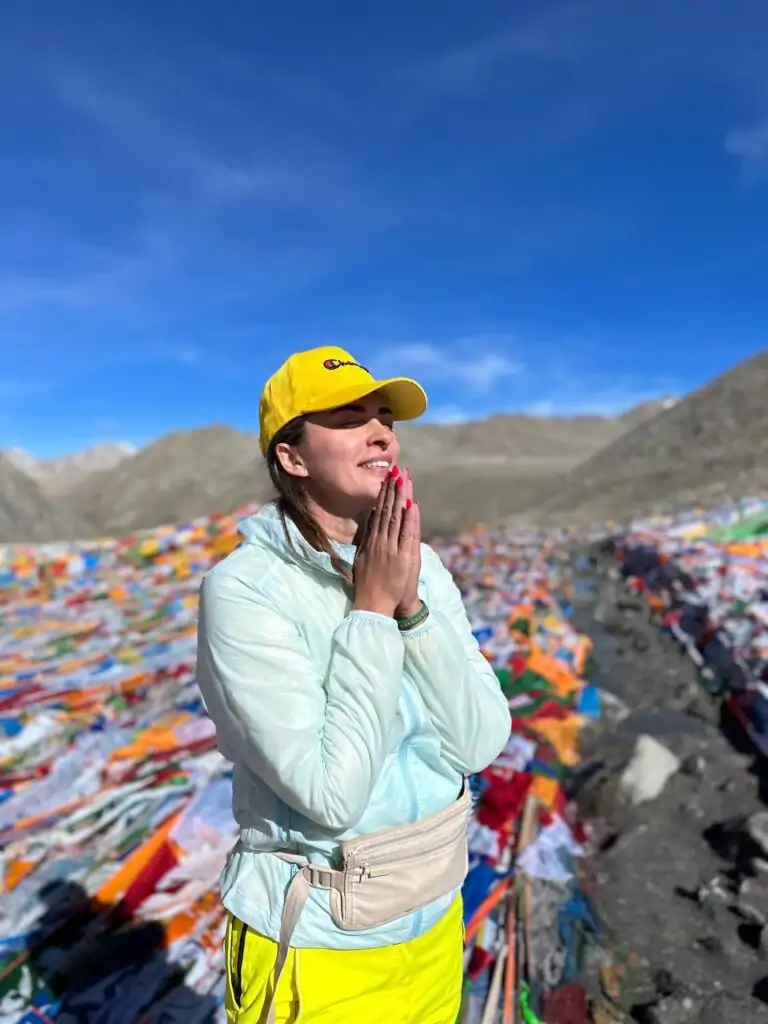
After Shivatsal Cemetery till the top of Green Tara Pass, symbolically our soul resides in the state of bardo. The top of the pass is a place of celebration, a long-awaited symbolic new birth takes place here.
From the top of the pass one can see the Karma Axe. The Karma Axe finally “cuts off” the old karma and one feels the beginning of a new life.
Overnight at the guesthouse.
Lake Zelenoy in winter timeElena Sitnikova on the Zelenaya Tara Pass at 5600 m
Green Tara Lake at Drolma La Pass
The axe of karma
Day 10
October 13, 2026, Tuesday. Day 3 of the bark around Kailas
The path is 12 km, the crossing is easy and beautiful, takes 3-4 hours.
Return to the hotel in Darcena, lunch.
An easy and beautiful path to DarcenViews on the 3rd day of the crossing
If you wish, you can go to Sarlung Monastery to see and meditate on the South Face of Kailas, from where the journey to the Inner Kora (Nandi Kora) begins.
This is a unique opportunity to see the South Face of Kailas up close and visit the place where the inner bark – Nandi bark – begins. The inner bark is the circumambulation of Mount Nandi adjacent to the South Face of Kailas. Buddhists and Hindus only do the inner kora if they have previously undergone the 13 outer koras. In addition, the route of the inner crust is technically difficult, some sections are very steep, slippery, the danger of rockfalls is not excluded. This may be why access to the inner crust is now closed by the Tibetan authorities.
On our trip, we will organize a field trip to the South Face of Kailas after passing the outer crust for those who wish to do so! This is another additional opportunity to be in the energies of Mt. Kailas. It will be possible to meditate with a view of the South Face of the mountain.
Overnight in a 4* hotel in Darcena.
The southern face of KailasTour participants at the South Face of Kailash
Day 11
October 14, 2026, Wednesday. Transfer from Darcen to Saga Overnight in a 3* hotel in Saga.
Group relocation
Day 12
October 15, 2026, Thursday. Transfer from Saga to Shigadza Overnight at 4* hotel in Shigadze.
Shigadze
Day 13
October 16, 2026, Friday. Transfer from Shigatze to Lhasa Return back to Lhasa.
Visit to the Center of Tibetan Culture (optional) with master classes on Thangka painting (Tibetan icon painting), calligraphy, making Lungta – prayer flags, incense making, etc.
Training takes place in the center of historical Lhasa in the house of our good friend. He is a 5th generation native of Lhasa.
Their whole family is typical representatives of the Tibetan people – they live according to all the rules and traditions. The training is conducted by experts in their art.
Walking around Lhasa
Walking around Lhasa
Princess Wenchen Evening Show. This is a very beautiful large-scale performance under the open starry sky about the love of real historical heroes – Tibetan king Songtsen Gampo and Chinese princess Wenchen, who lived in the 7th century AD. The sets and costumes are very beautiful. The place where the performance takes place is also beautiful, with a view of the Potala Palace in the night lights.
The show starts at 9:30 pm, goes on for about 2 hours. Cost from 380 to 1280 yuan (depends on the seats selected, not included in the tour price).
Free time to walk around Lhasa, evening shopping.
Overnight in a 4* hotel in Lhasa.
The evening show “Princess Wenchen.”
The evening show “Princess Wenchen.”
Evening Lhasa
Day 14
October 17, 2026, Saturday. Lhasa Walking Tour. Group transfer to Lhasa airport
Free time in Lhasa. Shopping. Transfer to Lhasa airport. The flight home.
Farewell to the group and departure to the airport
.
Cost of travel
From
$2950
The COST of the tour for 2026 does NOT depend on the number of people in the group and is: When booking: Before December 1, 2025 – $3,000 Before February 1, 2026 – $3,200 After February 1, 2026 – $3,400
Payment in installments is possible. For regular customers there is an accumulative system of discounts.
For group bookings, the cost of the tour is $2,950. The group leader assembles his/her own group. Detailed offer for group-leader see on link
The price of the tour includes:
Permits (permits to stay in Tibet).
All transfers on a comfortable tour bus for our group.
Accommodation in 4* hotels (Lhasa, Shigatze, Dharchhen), 3* (Saga – 2 nights) in double rooms and guest houses (during the bark around Kailas, 2 nights).
Breakfasts at hotels (at gesthouses 2 breakfasts are not included).
Excursions according to the program, all entrance fees.
Yaks and chasseurs during the bark or porters (to carry your belongings during the bark).
Accompanying the group with an experienced Tibetan Russian-speaking guide.
Oxygen canisters.
Sleeping bags and walking poles (optional).
The tour price does NOT include:
Air travel to and from Lhasa.
Lunches and dinners.
Horse services during the bark – if you can’t go yourself (if you need them, you usually don’t – participants’ belongings will be carried by yaks or porters – they are included in the tour price).
The cost of a horse for 1 day of bark is approximately $100.
Entry tourist visa to China (to be arranged in advance). Citizens of Russia, Belarus, Kazakhstan and some others do not need a visa.
Health Insurance.
Single (single) room supplement is optional, $740.
Tip to the driver, Tibetan guide.
Optional program items: theatrical show “Princess Winchen”, photo shoot, visit to the Tibetan Culture Center. Departure to the South face of Mount Kailas after the bark.
Мы используем cookie-файлы для наилучшего представления нашего сайта. Продолжая использовать этот сайт, вы соглашаетесь с использованием cookie-файлов.