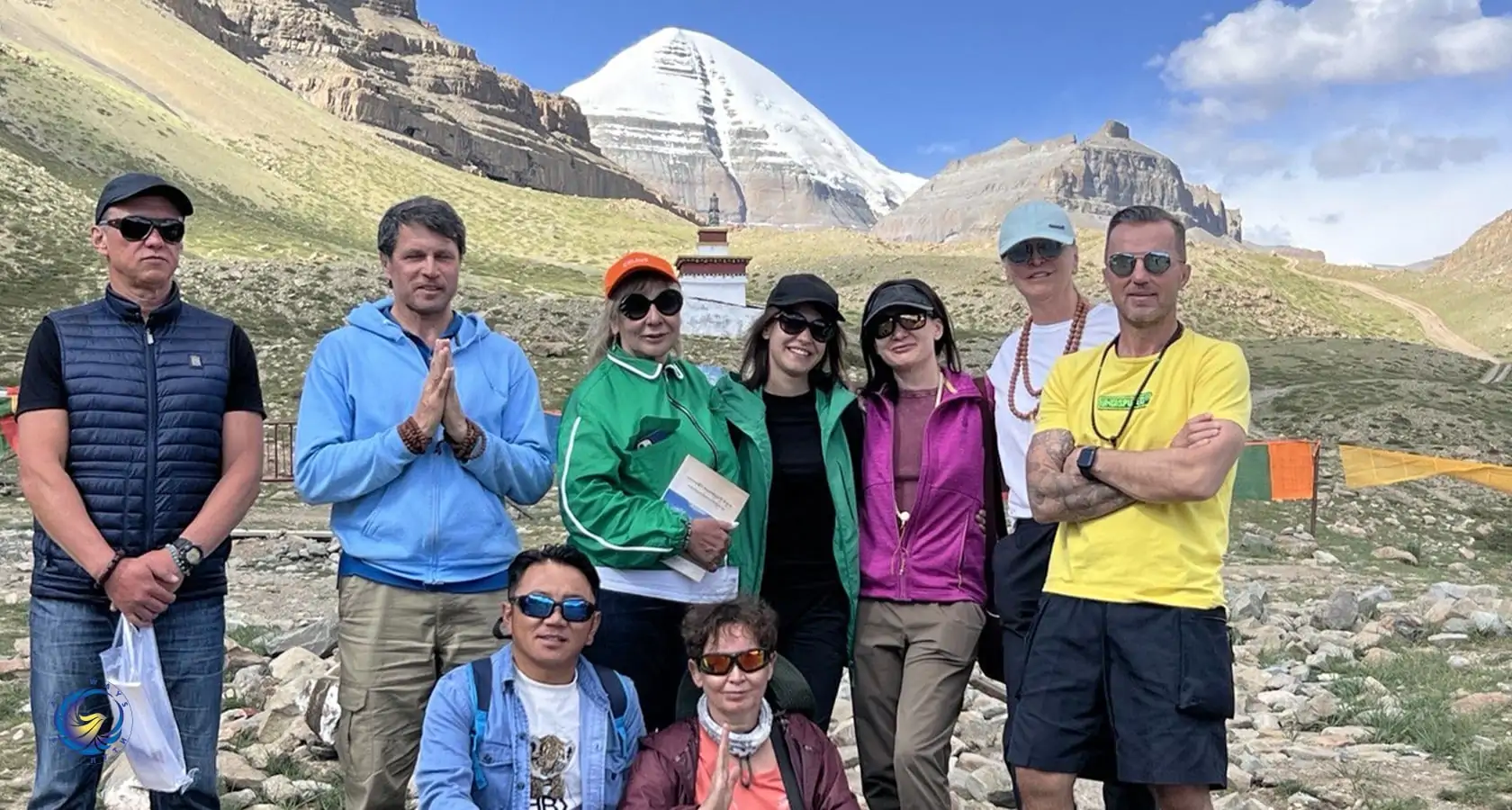
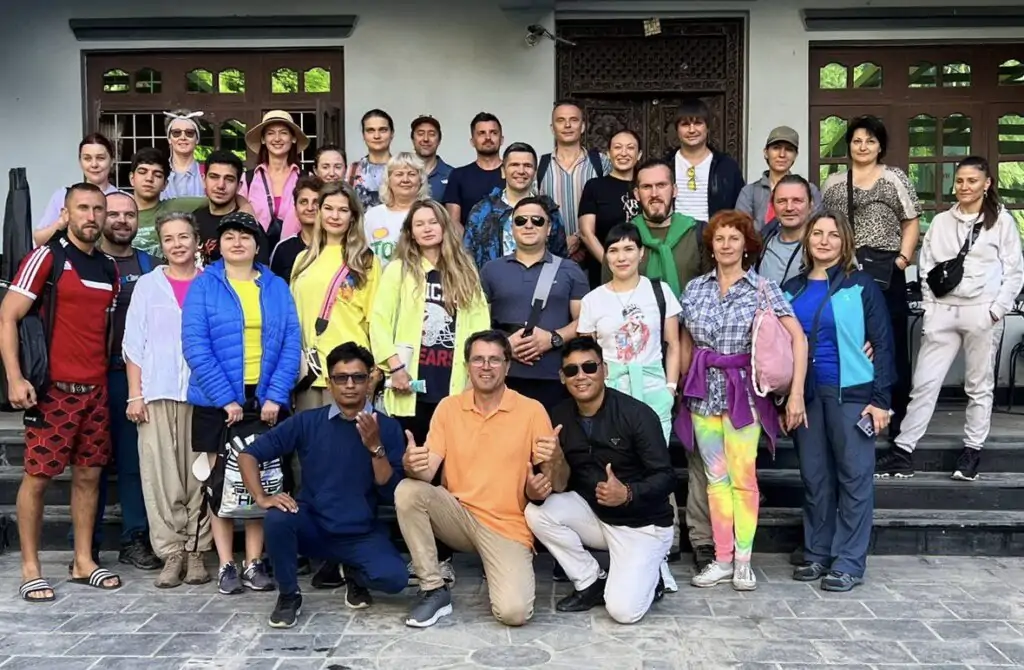
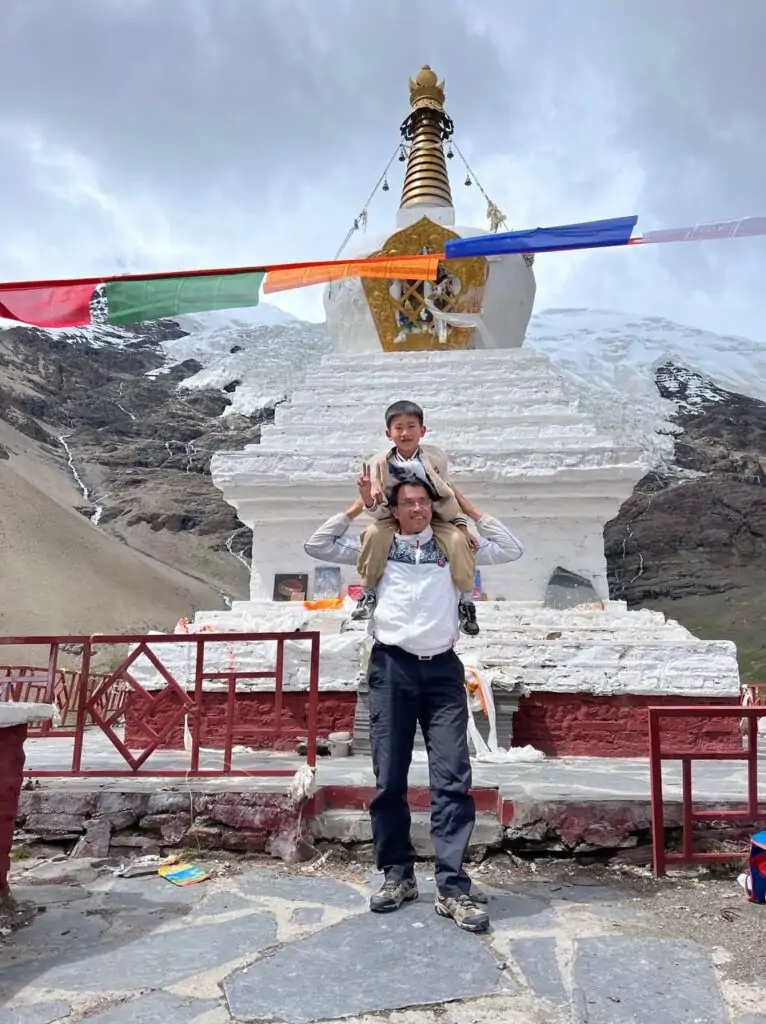
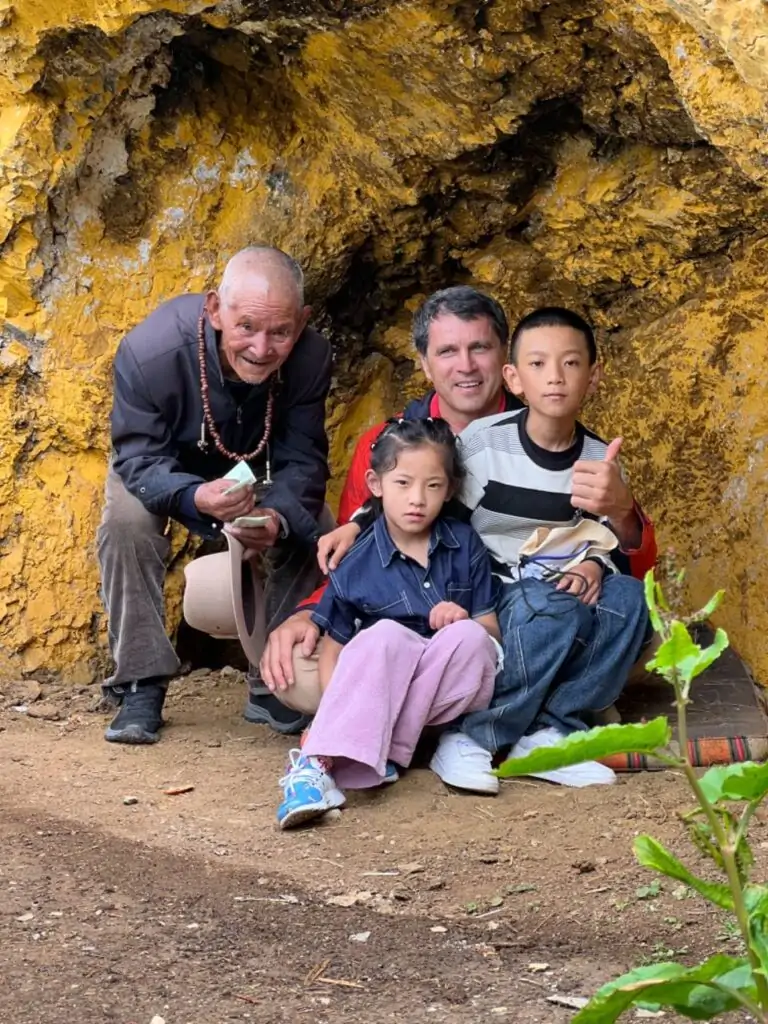
Tibet on the holiday Saga Dawa 2026 with Natalia Doshchanova. Kailas, Manasarovar, Everest, Guge Kingdom. 16 days Recruitment for the group is closed. A waiting list is open.
Our benefits:
– Our participants have a successful Kora experience: in over 13 years of experience, over 1000 people have made the pilgrimage around the sacred Mount Kailas thanks to our attention to detail and reliable organization.
*Checked routes that allow you to acclimatize competently and feel good at altitudes over 3600 m.
– Tibet’s best certified guides.
– Accompanying the group with two experienced guides: a Tibetan guide and a Russian-speaking host-translator.
– Accommodation only in vetted 4-star hotels (where available).
– Travel by comfortable and reliable buses.
– The price already includes sleeping bag, trekking poles, drinking water, tea and oxygen in the bus.
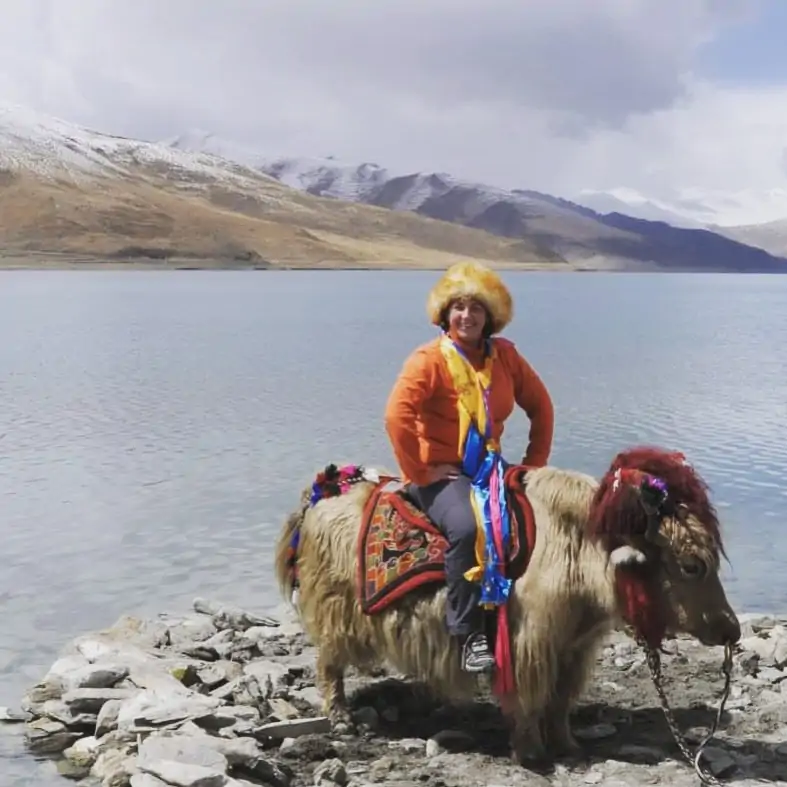
– The services of yaks and porters during the kora are included in the price. You don’t have to carry your belongings during the trek, they will be carried by porters or yaks. You carry only the essentials.
– Possibility to fly around Cora by helicopter (optional)
-Inner Kora – 1/3 of the way: you can drive the first 6 km of the route by vehicle and spend a few hours near Kailas (optional)
– Accumulative discount system (“Rainbow” and Partner Program)
– Possibility of payment in installments.
2026 is the year of the fire horse according to the Chinese calendar. This year is considered particularly auspicious for visiting Mount Kailas. One circumambulation of the mountain (kora) is equal to 13 circumambulations! This means that all the merits and blessings you receive as a result of your pilgrimage are increased 13 times – many times over!
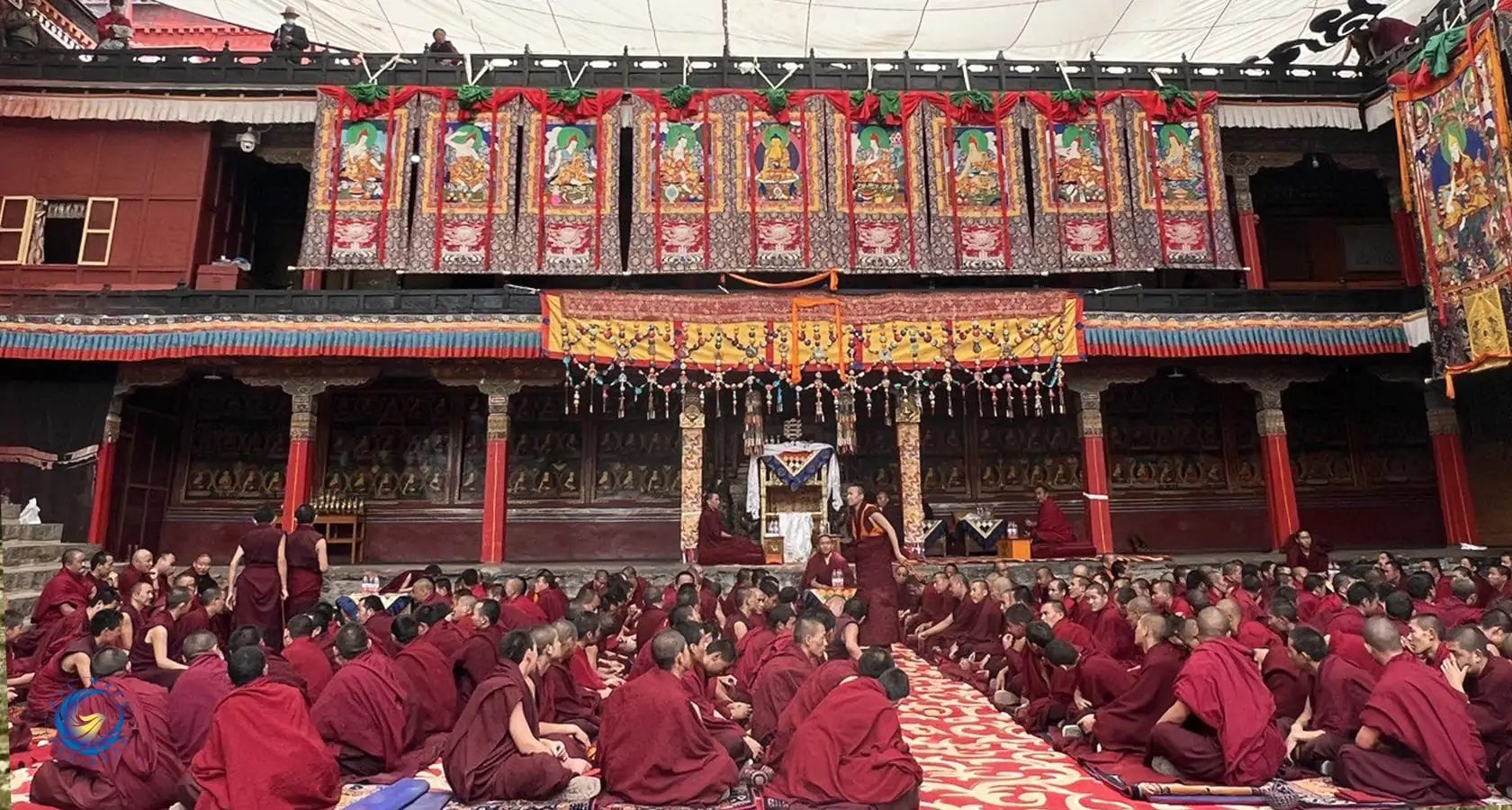
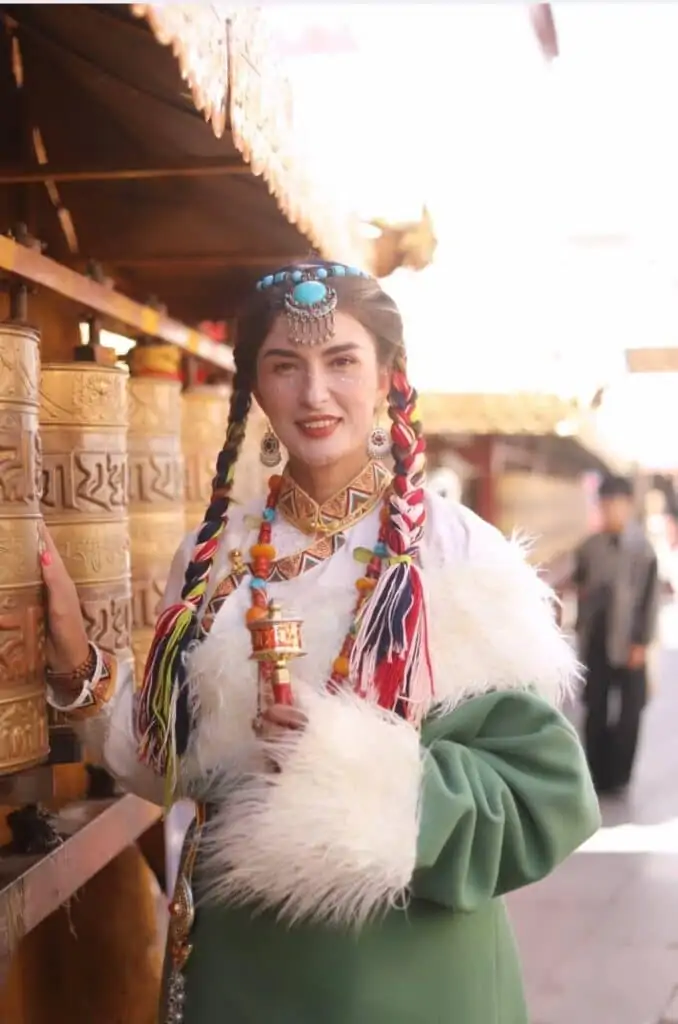
This trip also falls during the most sacred time of the year for all Buddhists and Tibetans, the Saga Dawa Festival. On the main day of this month, the Full Moon celebrates the birth, enlightenment and departure to Paranirvana of Shakyamuni Buddha. Tibetans devote the whole month to prayers, meditation, pilgrimages to holy places, as it is considered to be the most favorable time for purification of karma and accumulation of merit. Pujas (services) are held in all Buddhist monasteries and temples. Tibetans dress in their most ornate costumes.
Весь месяц в праздник Сага Давы тибетцы посвящают молитвам, медитации
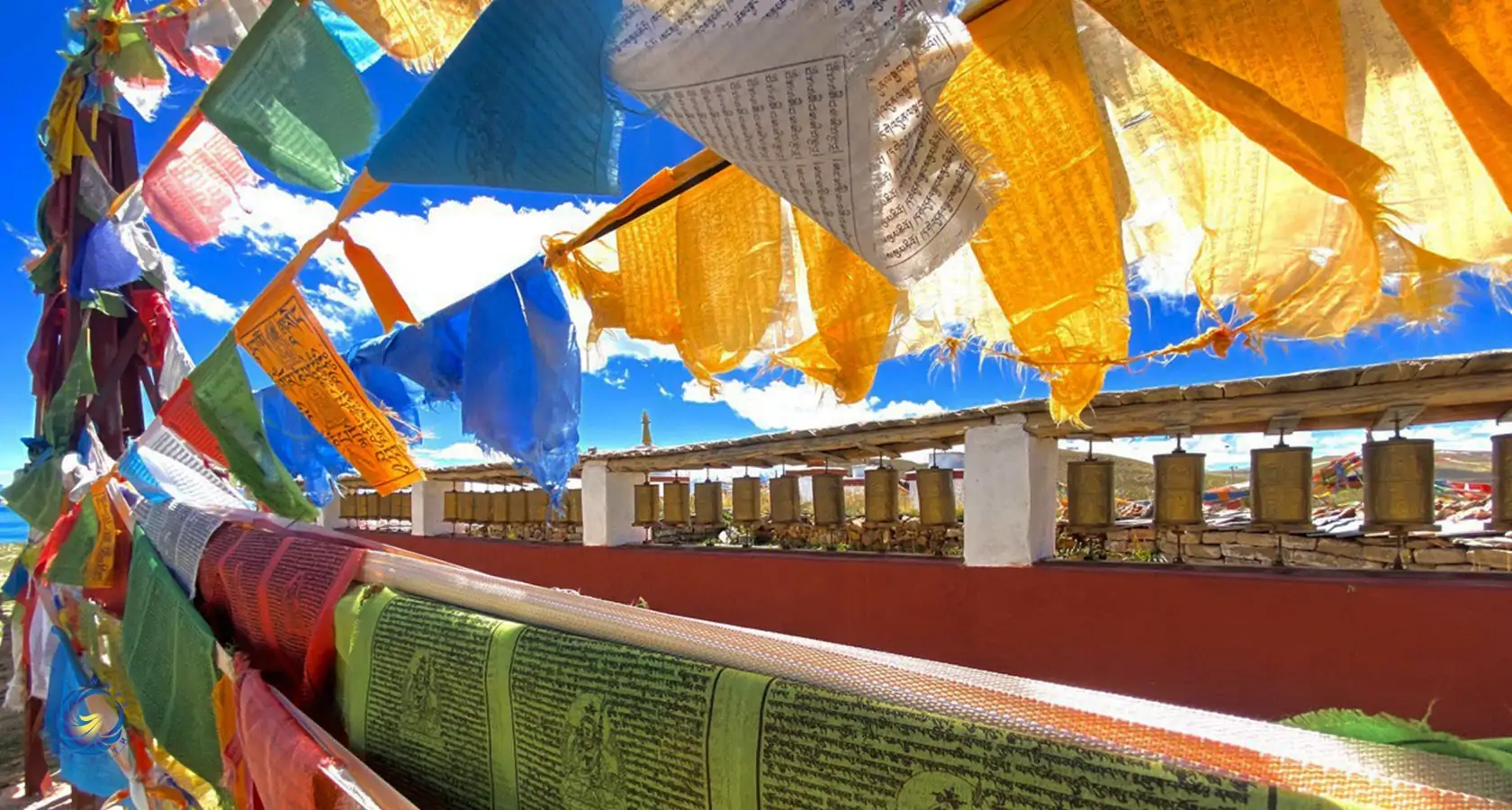
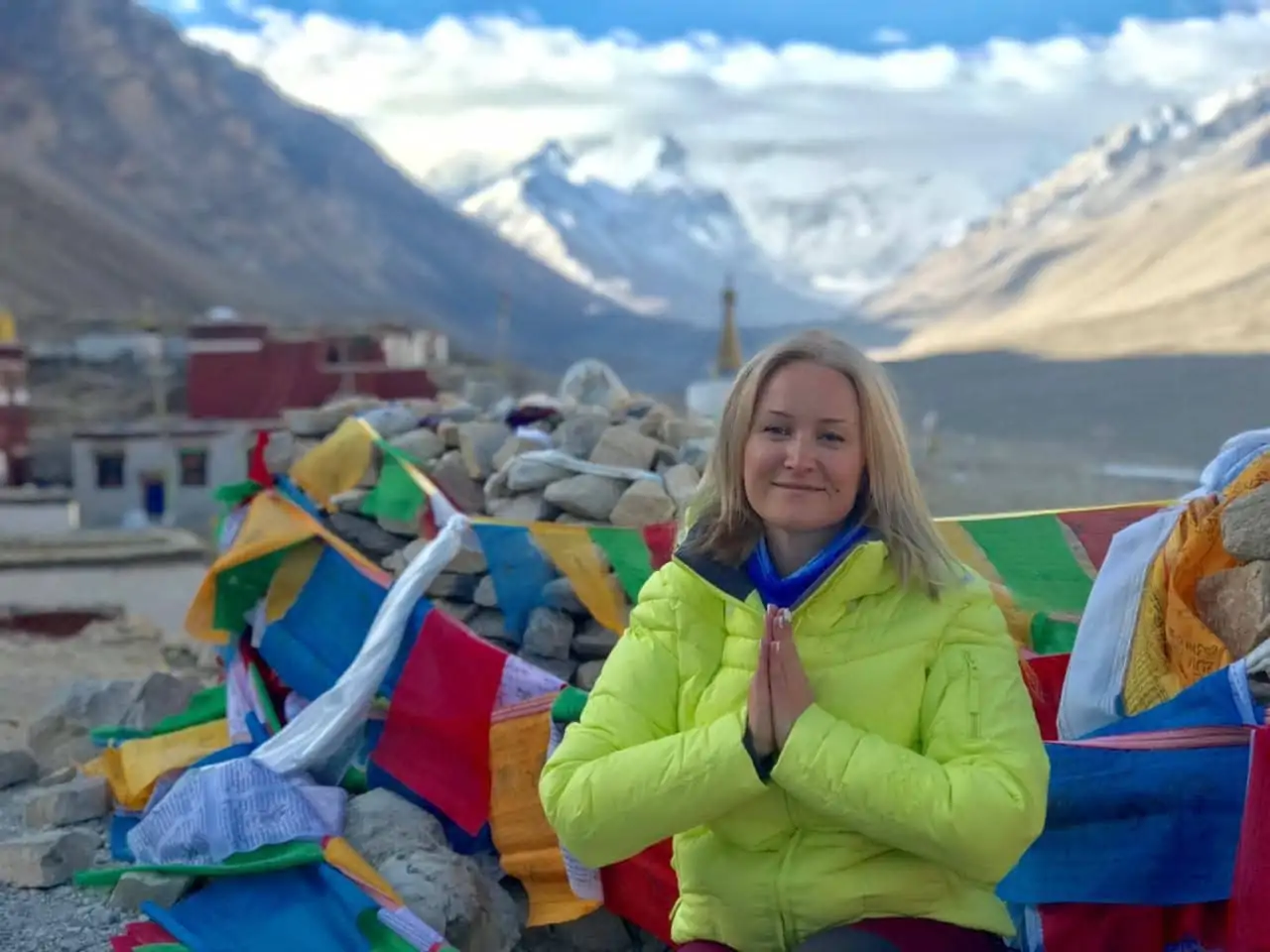
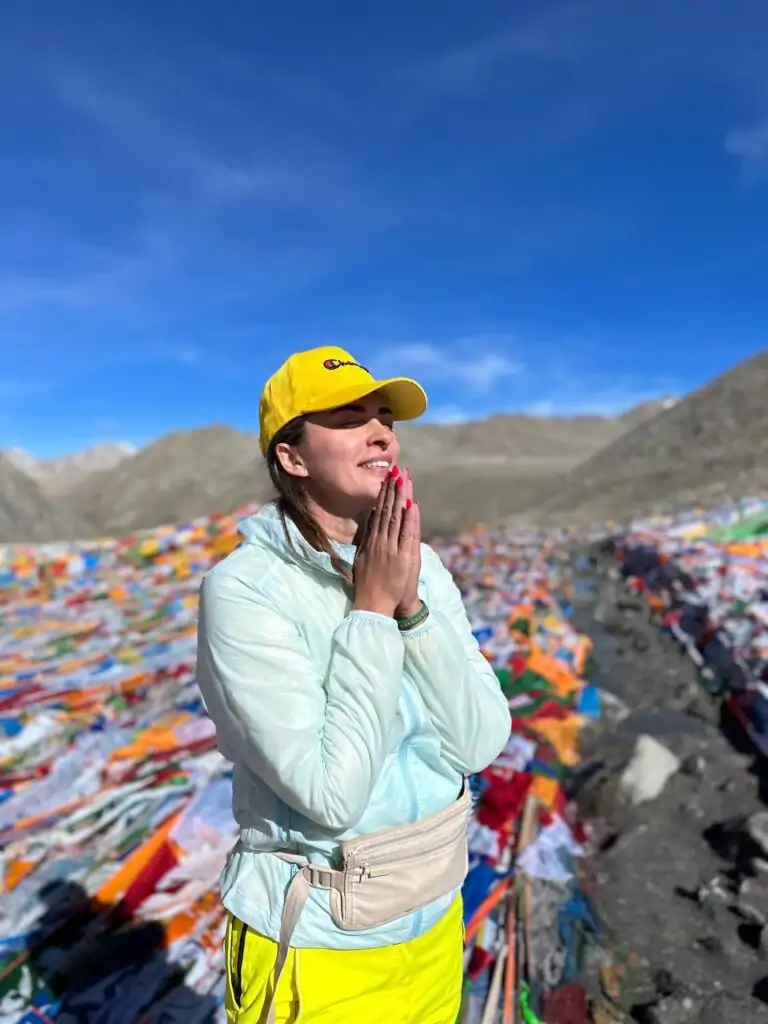
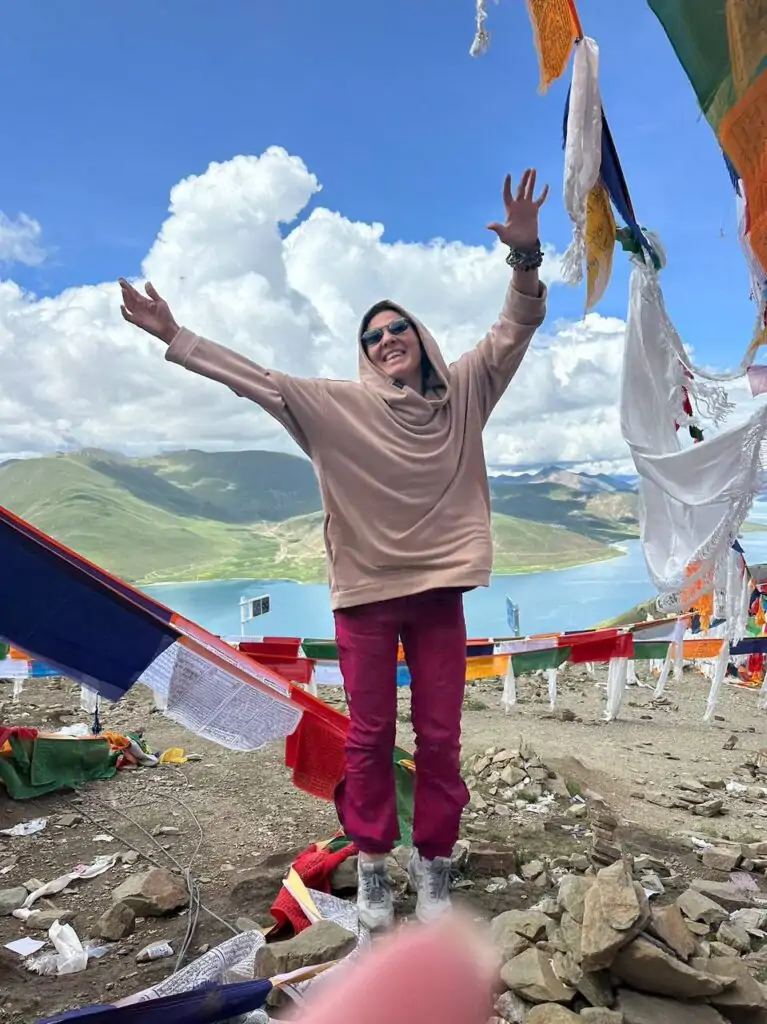
Тибетские молитвенные флажки
In our program, the bark around Mount Kailas falls just on the main day of the festival, on the full moon of May 31, 2026. One bark passed on Saga Davu counts for 3 bark. On the day of the Full Moon, the old flagpole at the foot of the mountain is torn down and a new one is erected. This is a big spectacular event.
Об особенностях маршрута
In this itinerary, we have deliberately added one day at the feet of Kailas to the traditional three-day Kore so that the expedition participants have the opportunity to come into contact with the unique experience of comprehending the manifestations of Shiva’s energies. Under favorable circumstances, we will be able to touch the face of Kailas at the northern gate.
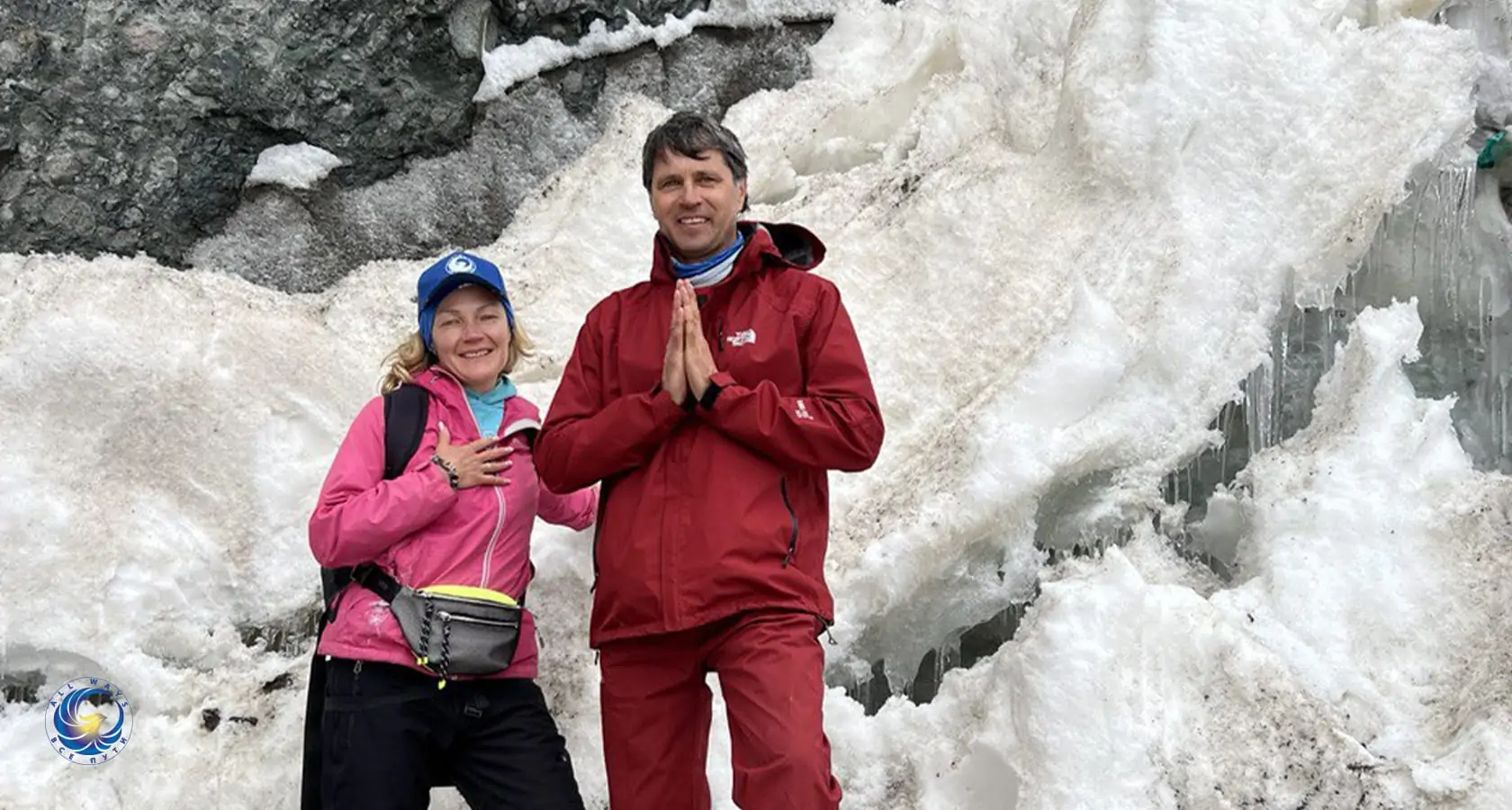
Владимир и Елена у Северного лица Кайласа
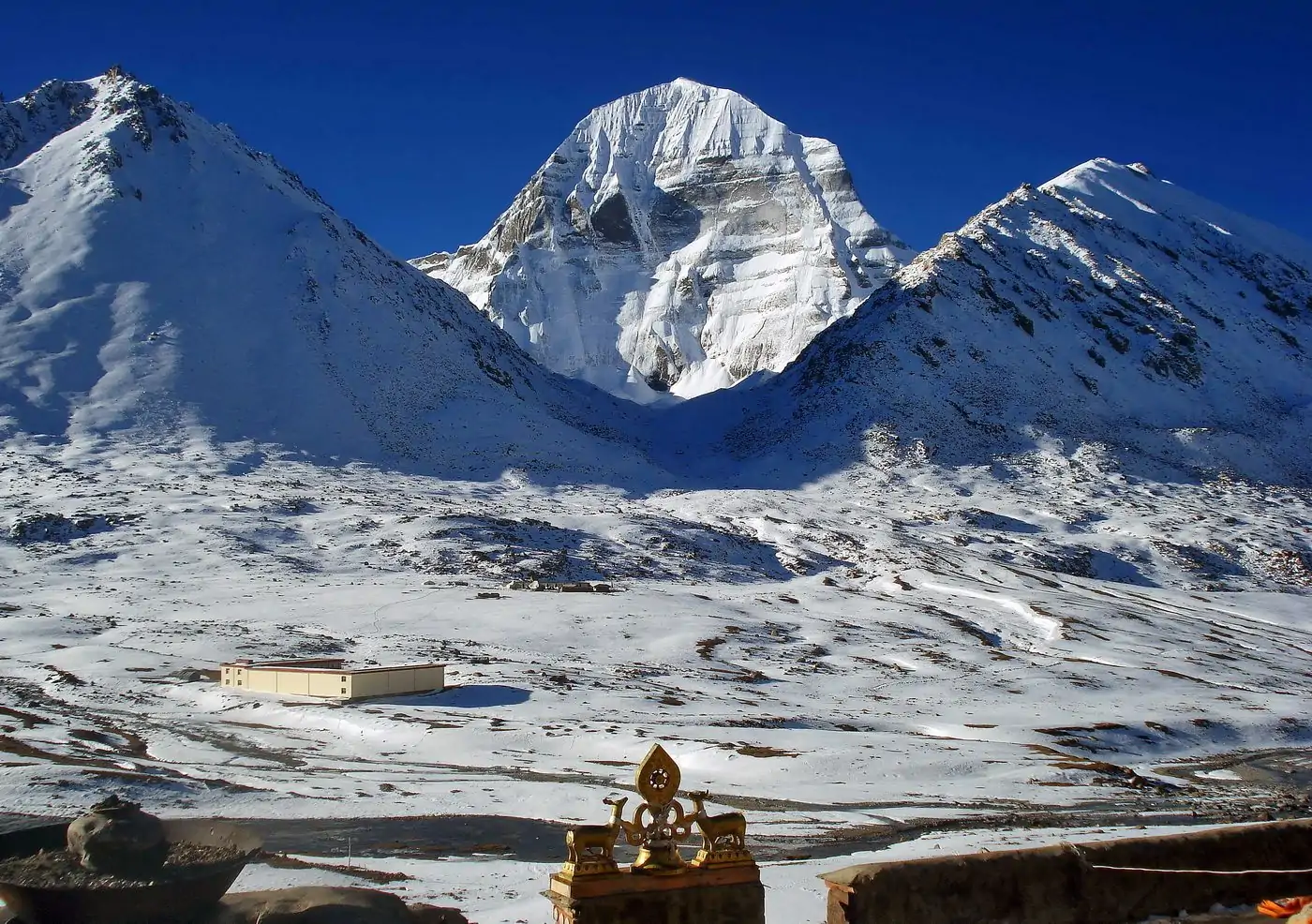
The end of the traditional Kora will be crowned by a visit to theSouth Face of Kailas. This is the southern gate that opens the way to the inner Kora, the Kora Nandi. Nandi is a mighty bull, devoted to Shiva, humbly and carefully carrying his Lord through all worlds. Here, at the foot of Kailas, is his heart. Here, in the ringing peace of meditation, one can hear the endless OM, creating universes of human destinies.
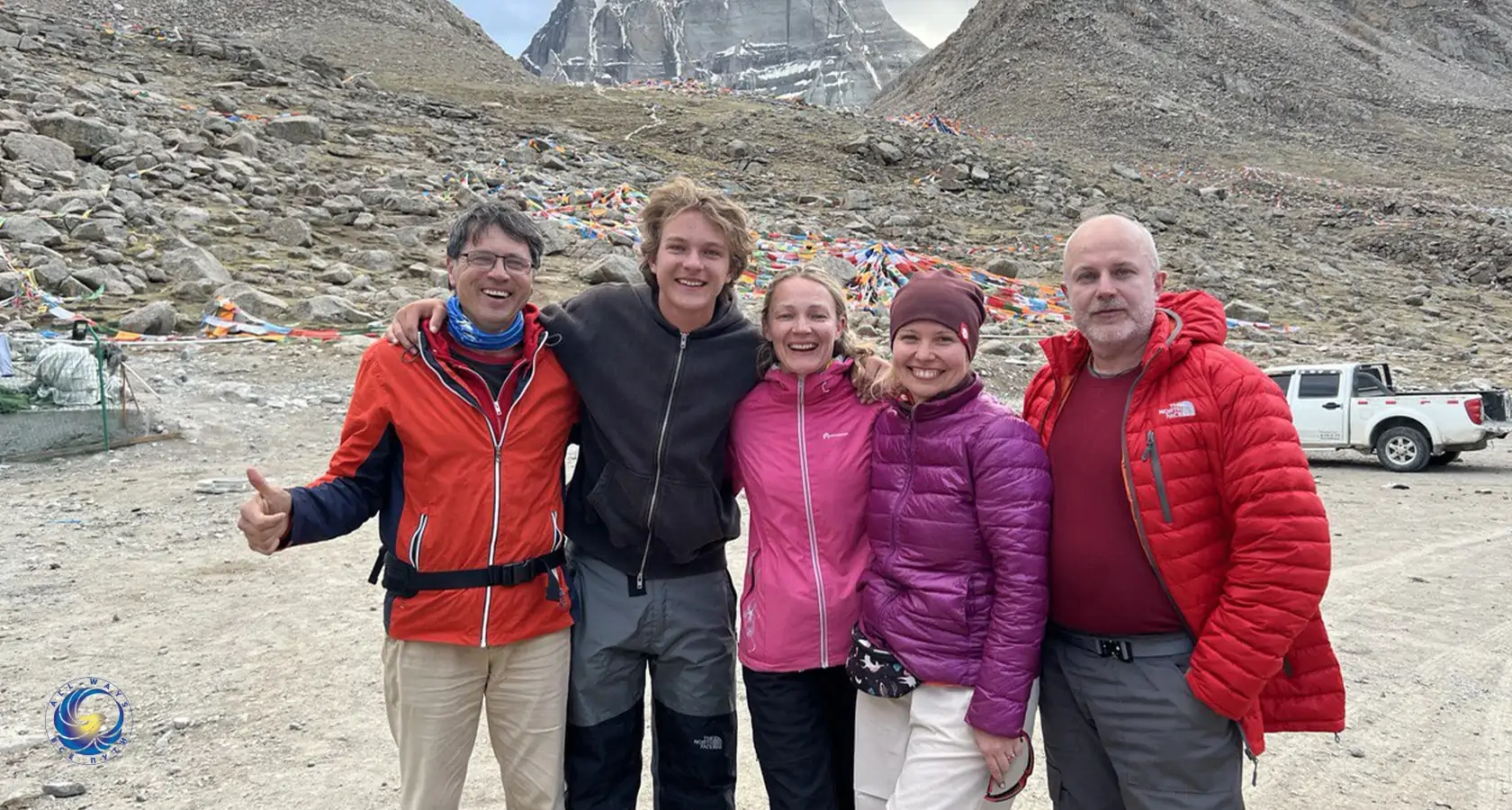
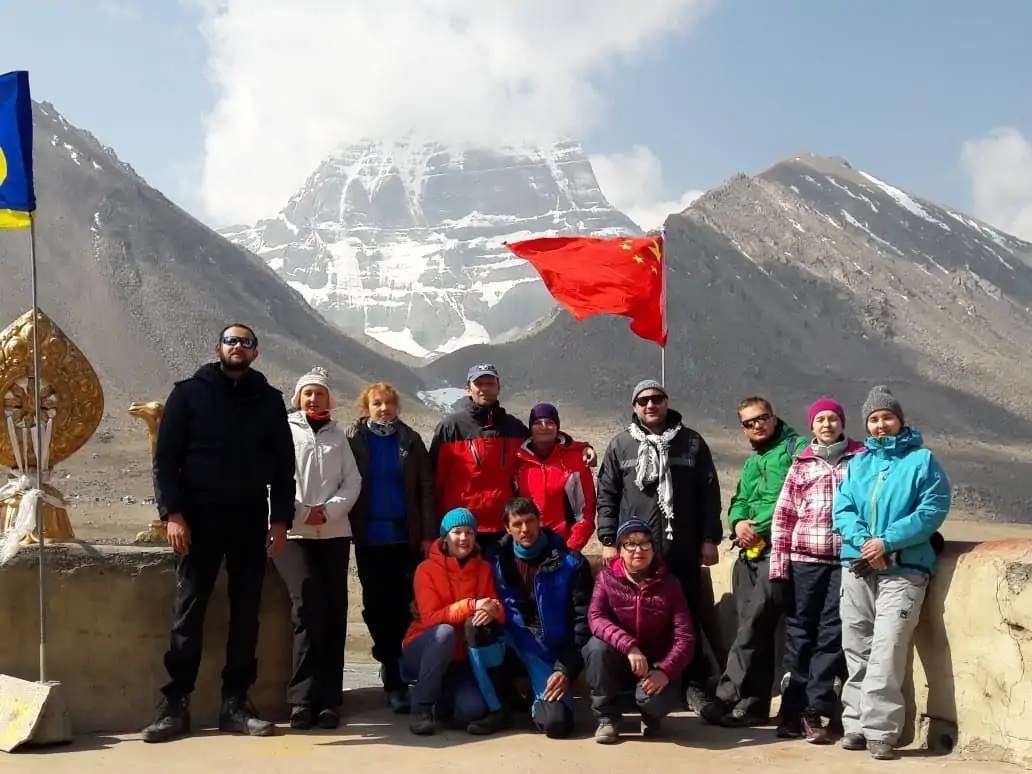
Участники тура у Южного лица Кайлаша
In this itinerary, we included:
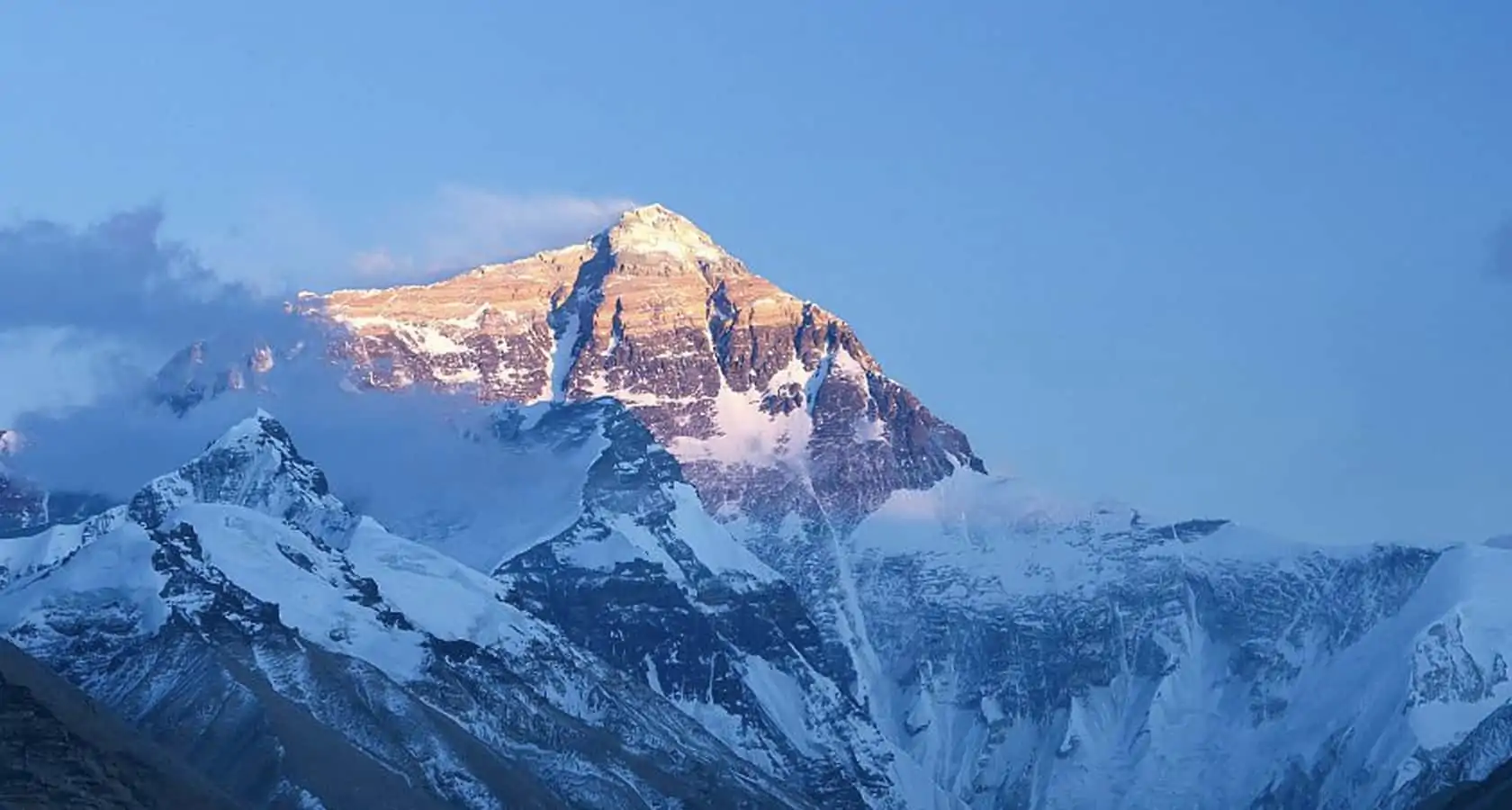
Посещение Эвереста – священнейшего места Гималаев, самой высокой горы на планете Земля (8848 метров). Местные ламы считают эту гору живой богиней нашей планеты, называя ее Джомолунгма («Ча-мо-лунг-ма»), что в переводе означает «Божественная Мать Земли». Мы поднимемся на высоту 5050 м, чтобы увидеть северную сторону этой горы в лучах заходящего солнца и восходящего.
Кору вокруг озера Маносаровар – обители возлюбленной супруги Шивы, нежной Парвати – Матери мира.
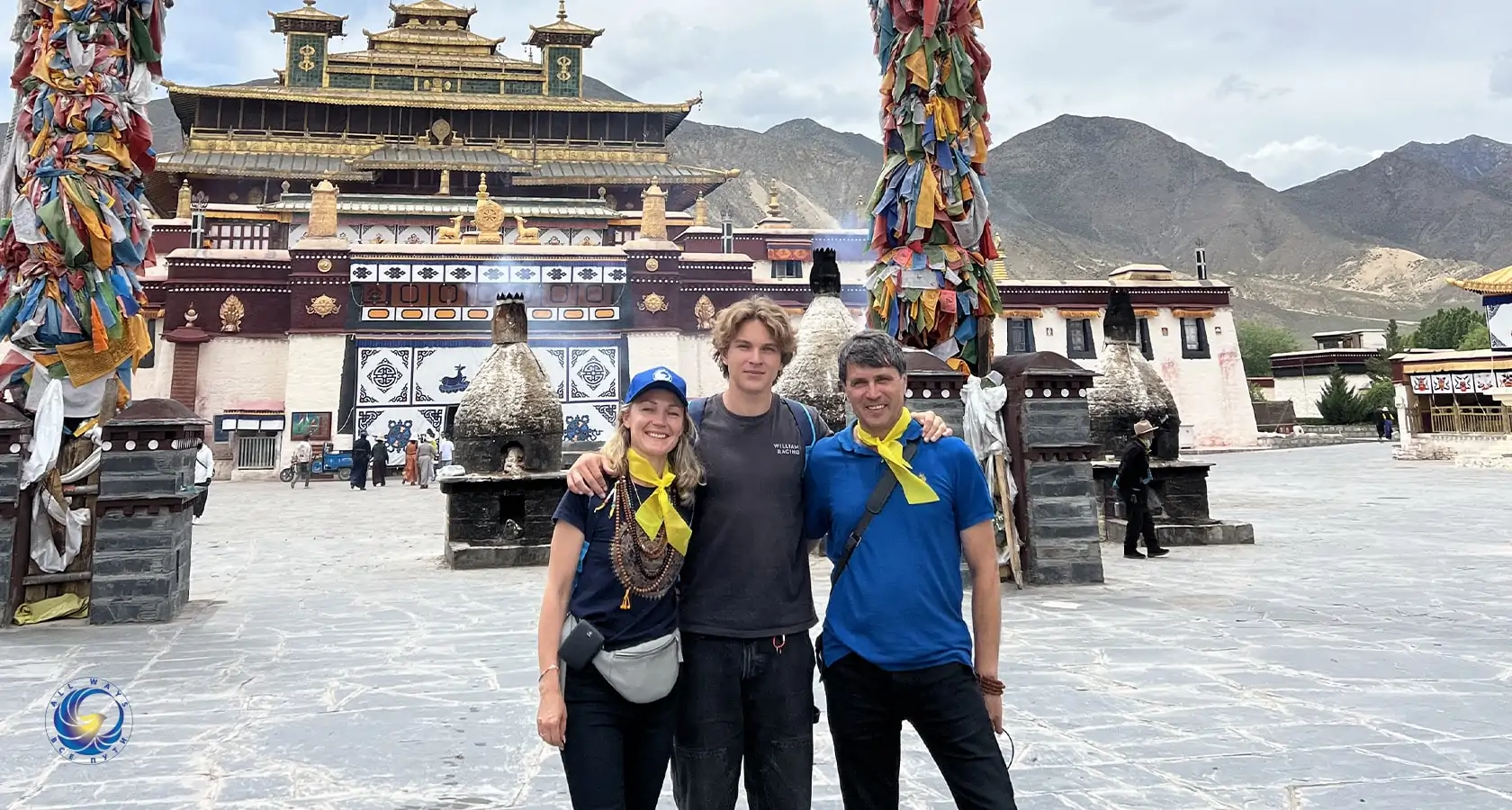
Посещение монастыря Самье – первой обители буддизма в землях Тибета.
Участие в ритуальном священнодействии – почитания одного из проявлений Будды во время сакральной церемонии – пужди в одном из монастырей.
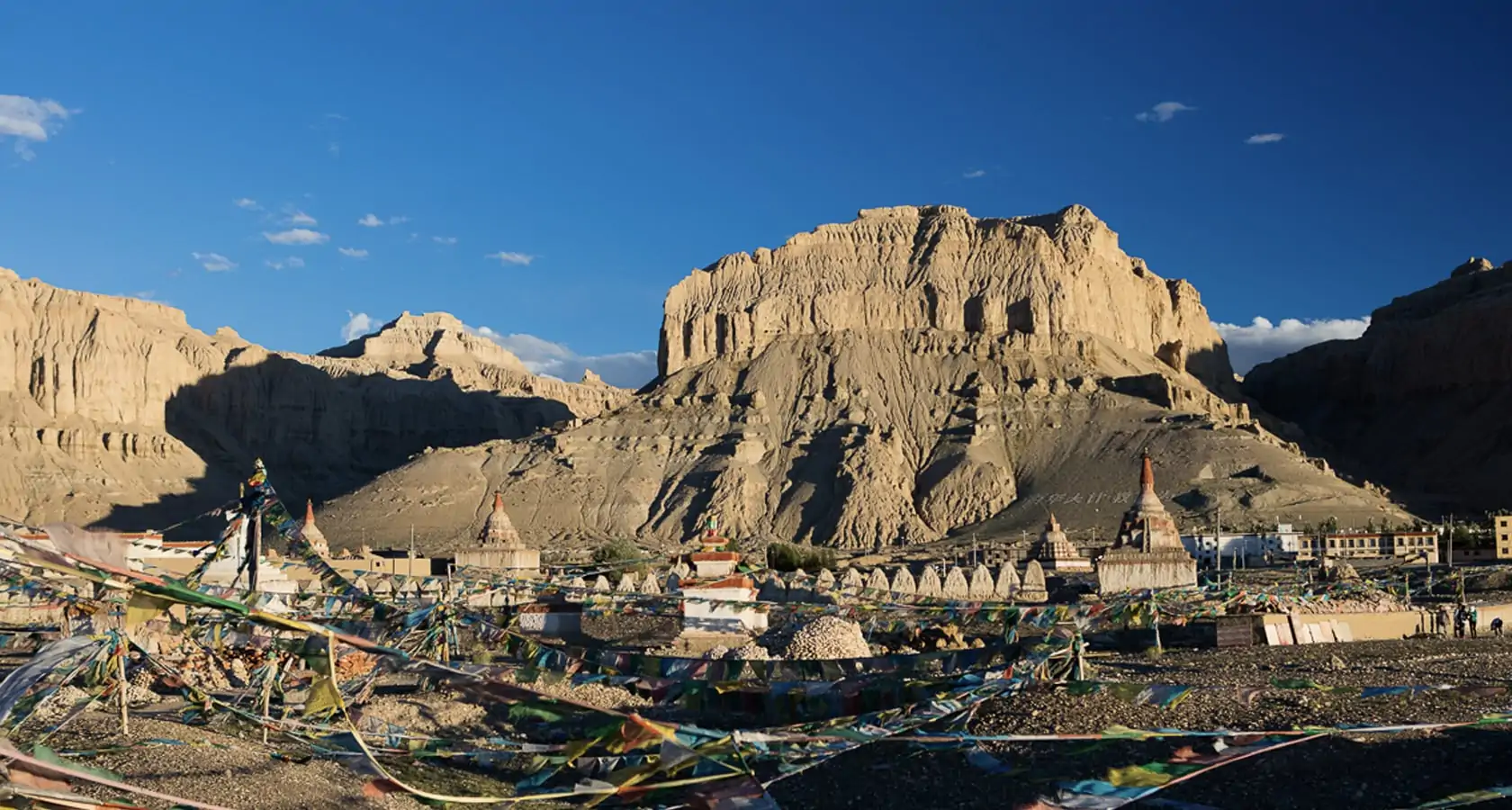
Посещение древнего царства Гуге, существовавшего в 10-17 в. Мы увидим золотые реликвии дворцов, пещер, монастырей и домов, возвышающихся на горном склоне высотой 300 м. Это очень красивое уникальное зрелище!
Первые лучи рассвета на сияющей льдом северной стене Вершины Мира
Посещение монастыря Самье – первой обители буддизма в землях Тибета
Tour dates: May 23 – June 7, 2026 (dates while in Tibet, no flight).
Number of days: 16 days / 15 nights in Tibet.
Where to: Tibet (territory of China).
Number of people in the group: Number of people in the group: from 9 to 20.
Where to fly to: the airport of Lhasa, the capital of Tibet.
What to do: We will make a kora (ritual circumambulation) around Mount Kailas and around Lake Manasarovar, meditate at the North and South faces of Kailas. We will see the beautiful capital Lhasa, Everest, etc.
Accommodation: in 4*, 3* hotels and guest houses – according to the program.
Difficulty of the route: The bark around Mount Kailash is a 4-day hike of medium difficulty that is accessible to many people with good physical fitness and prior preparation.
Visa: tourist visa to China + Permit (permission to enter the territory of Tibet) – processed through us. Citizens of Russia, Belarus, Kazakhstan, Armenia and some others do not need a visa.
Insurance: standard medical insurance for traveling abroad.
Tour cost: $3,500 for early booking. $3,100 for group bookings. More details of the tour cost are given after the tour program.
The group is accompanied by: Natalia Doshchanova, an experienced Tibetan guide and group leader.
Organizer: Travellers’ Club “All Ways”.
Pre-registration to the group: on WhatsApp / Telegram +1 530 8440836.
Посещение столицы древнего царства Шаншунг – Долины Гаруды
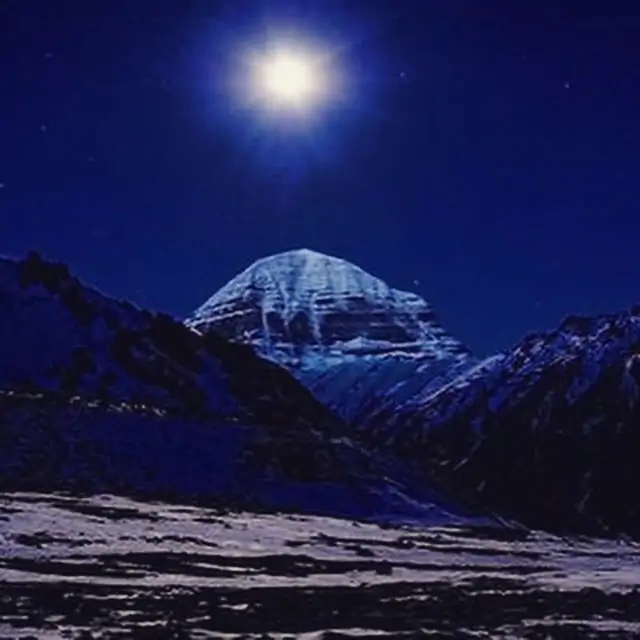
Гора Кайлас
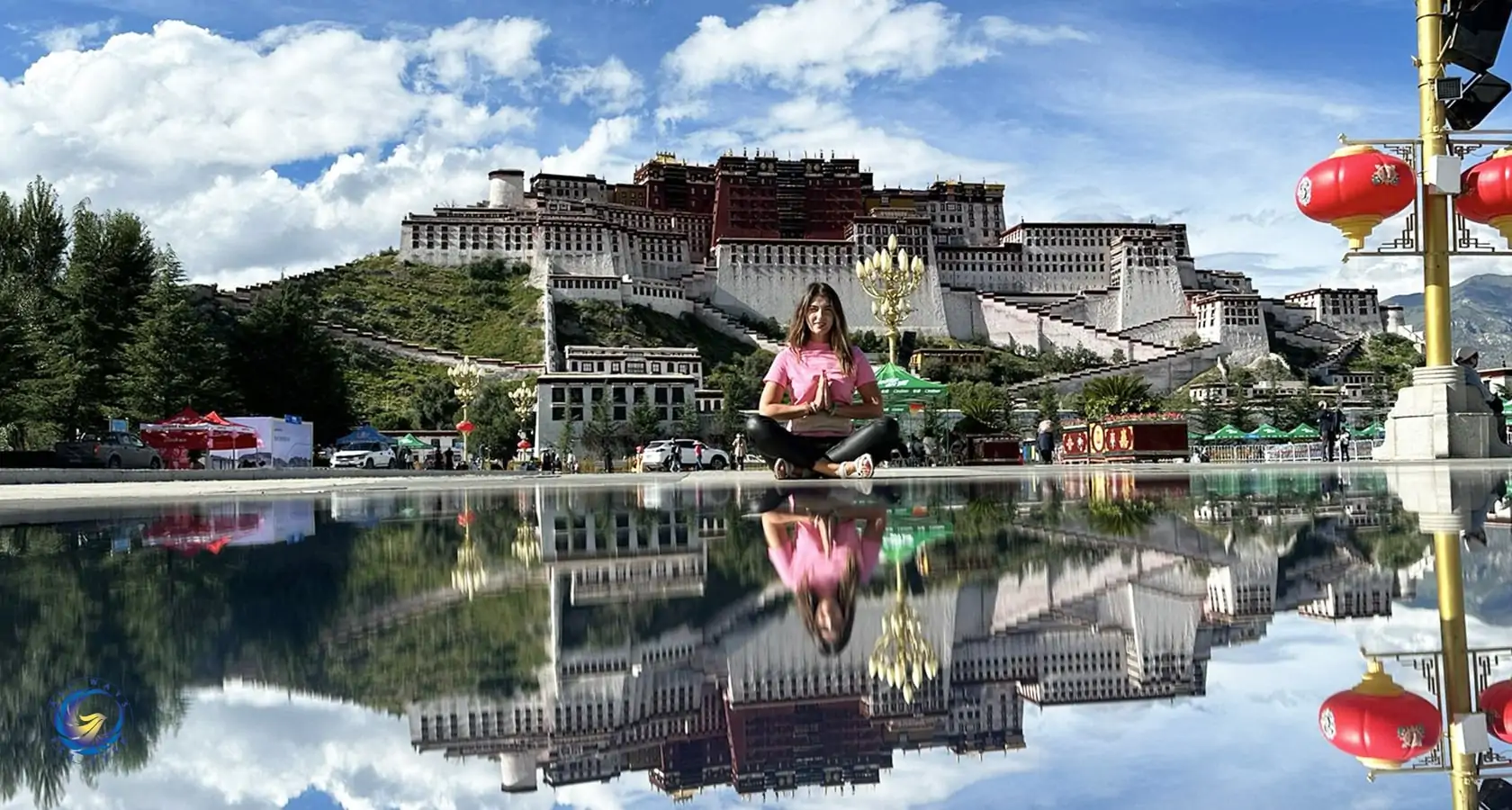
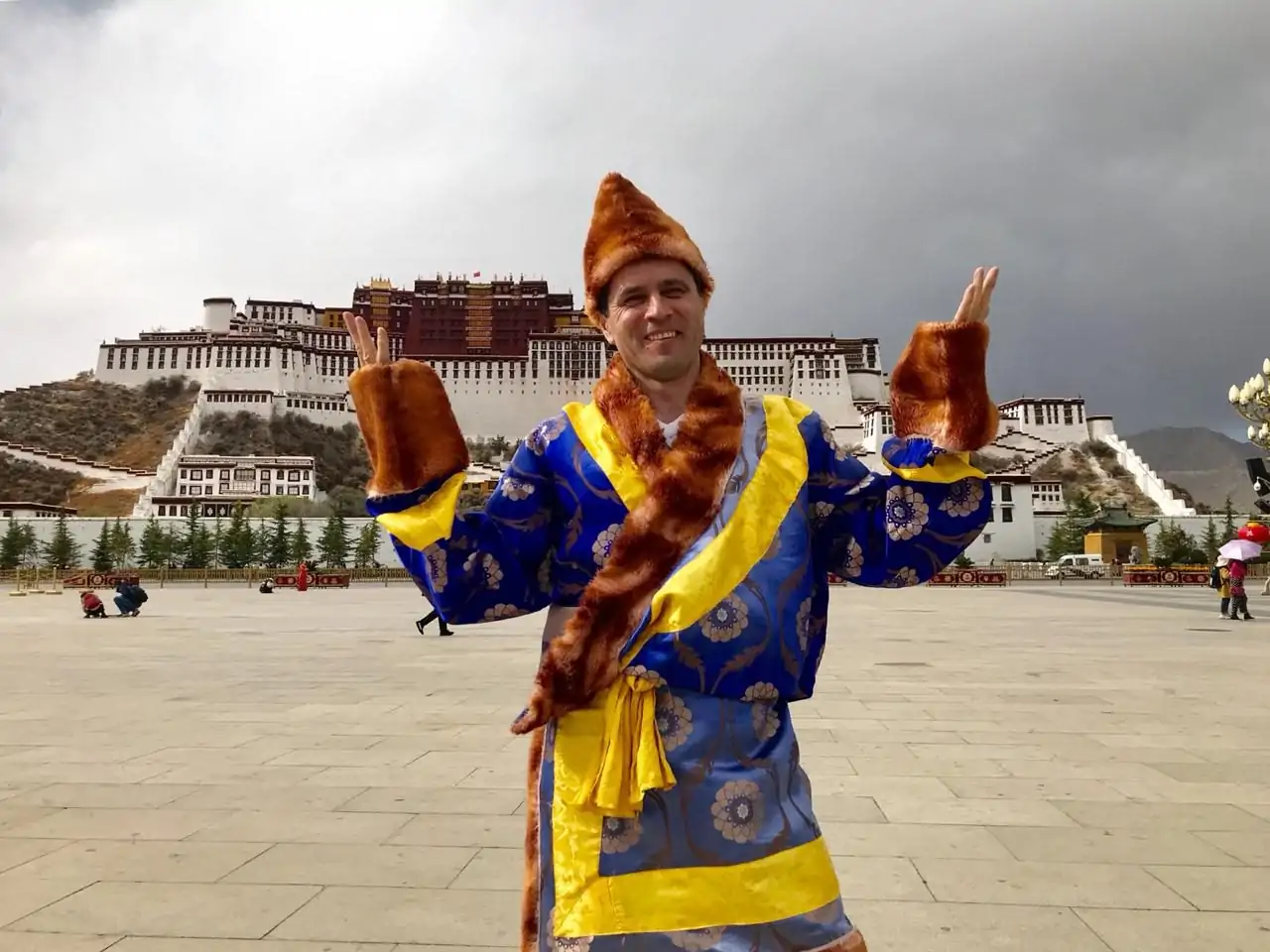
Дворец Потала в Лхасе
Route
City of Gods - Lhasa - the capital of Tibet (3650 m)
Samye Monastery and Chimpu Caves
Drak Caves and CavesYerpa
Shigatze (3845 m)
Everest Base Camp (5050 m)
Saga (4640 m)
Dharchhen (4576 m)
Sacred Lakes Manasarovar and Rakshastal (4590 m)
Kailas - Bark Around the Mountain (4 days) (4576 to 5669 m)
North Face of Kailas, South face of Kailas
Dharchhen (4576 m)
Guge Kingdom
Ali Airport
Lhasa
The group will be accompanied by group leader Doshchanova Natalia – spiritual guide to places of Power.
More than 20 years in spiritual practices, leads groups to shrines all over the world and all religions.
Visited shrines in 20 countries and received initiations and initiations in them.
Passed two Kora around Kailas – in 2010 and
in 2023 as a group leader.
Kundalini Yoga teacher/teacher.
Regressologist/therapist,
Master/healer in the system of Reiki, Channeller,
leading transformational processes in the most ancient game of self-knowledge – Leela.
May 23, 2026, Saturday. Arrival in Lhasa, the capital of Tibet
Arrival in Lhasa, the capital of Tibet. Acclimatization and familiarization. Meet at the airport in Lhasa, the capital of Tibet. Transfer to the hotel (transfer about 1 hour). Lhasa, located at an altitude of 3,650 meters.
Overnight in a 4* hotel in Lhasa.
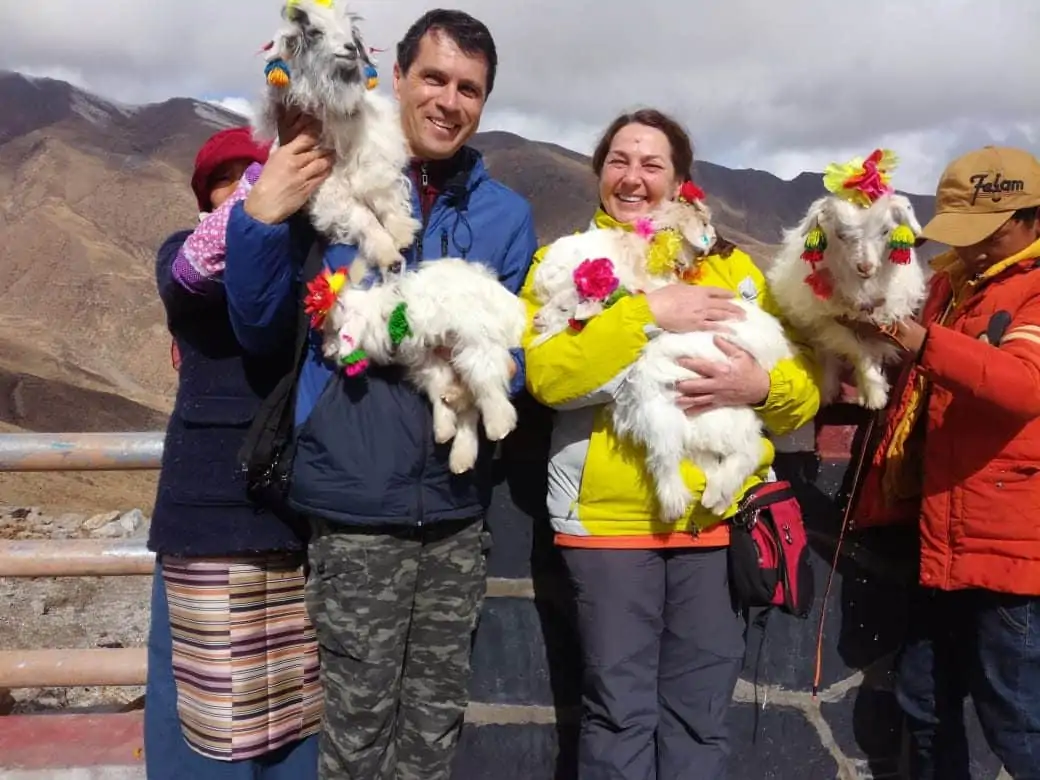
Vladimir and Elena with Tibetan guide Sonam
Day 2
May 24, 2026, Sunday. Lhasa Attractions. Potala Palace, Jokang Temple.
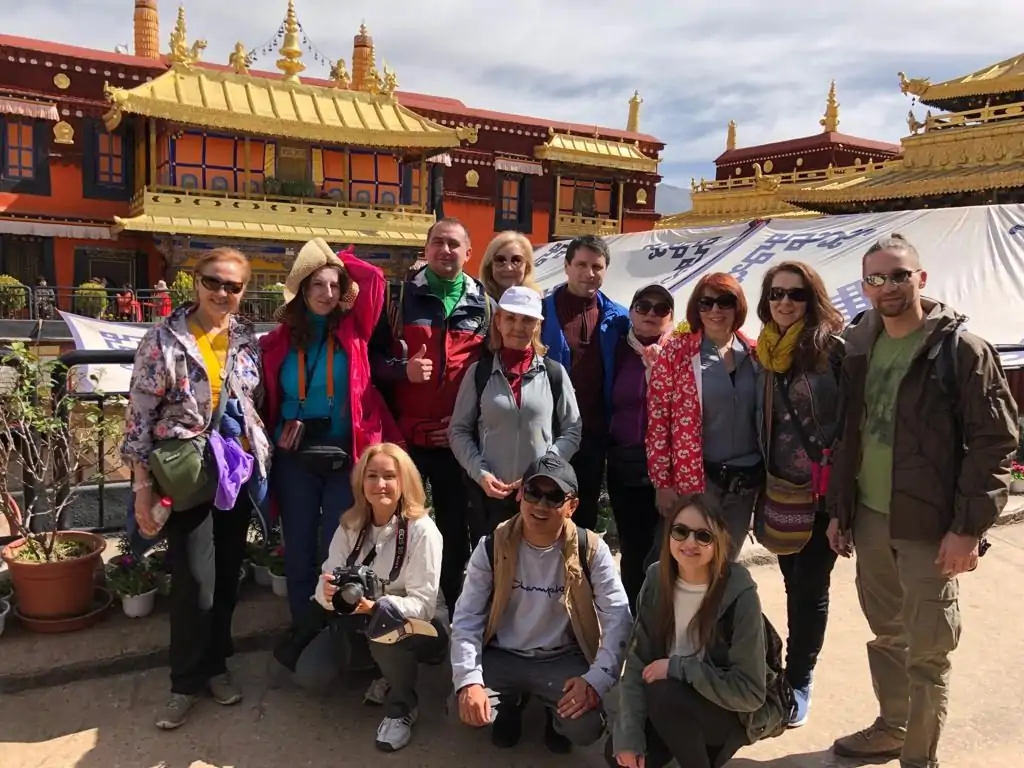
Visit to the most sacred temple of Lhasa – Jokang (17th century). Pilgrims from all over Tibet come here to worship the sacred statue of Shakyamuni Buddha, brought to Lhasa in the 10th century. This is the very first statue of Buddha (Jowo Shakyamuni), which is 2500 years old. It was consecrated by the Buddha himself.
The temple has 14 separate prayer rooms dedicated to Tsongkhapa, the founder of the Gelugpa school, Avalokiteshvara (one of the main manifestations of Buddha), and the famous teacher (guru) Lama Rinpoche. Pilgrims stretch out in front of Jokang Temple.
Miracles happen in this temple! The Buddha statue heals people and fulfills innermost wishes. Dr. Myasnikov shared the story of his life after visiting the Temple: “While visiting the temple, my wife put a little money in front of the Buddha and asked for health and good luck for her son. The next morning (!!!!) she calls me and silently shows me her leg. The ulcers had all healed overnight! I am well aware that this just can’t happen! And when in 2 weeks we landed in Moscow, and my son still on the plane turned on his phone, the first e-mail was from the Sorbonne: “we have fallen out of one of the applicants, and you are next in line. We’ve accepted you!”.
Tour participants at the sacred temple of Lhasa – Jokang
Jokang Temple
Walking with pilgrims along Barkhor Street, exploring the old market.
Those who wish can have a professional costume photo shoot on the historic street (400 yuan for makeup, hair, costume and photo shoot).
Evening show “Princess Wenchen” – optional . This is a very beautiful large-scale performance under the open starry sky about the love of real historical heroes – Tibetan king Songtsen Gampo and Chinese princess Wenchen, who lived in the 7th century AD. The sets and costumes are very beautiful. The place where the performance takes place is also beautiful, with a view of the Potala Palace in the night lights. The show starts at 21:30 and lasts about 2 hours. Cost from 400 to 1300 yuan (depends on the selected seats, the tour price does NOT include tickets to the show and transfer).
Overnight in a 4* hotel in Lhasa.
Evening show “Princess Wenchen”Evening show “Princess Wenchen”
Day 3
May 25, 2026, Monday. Lhasa and surroundings. Drak Yerpa cave complex. ЛDalai Lam’s summer residence – Norbulinka Park
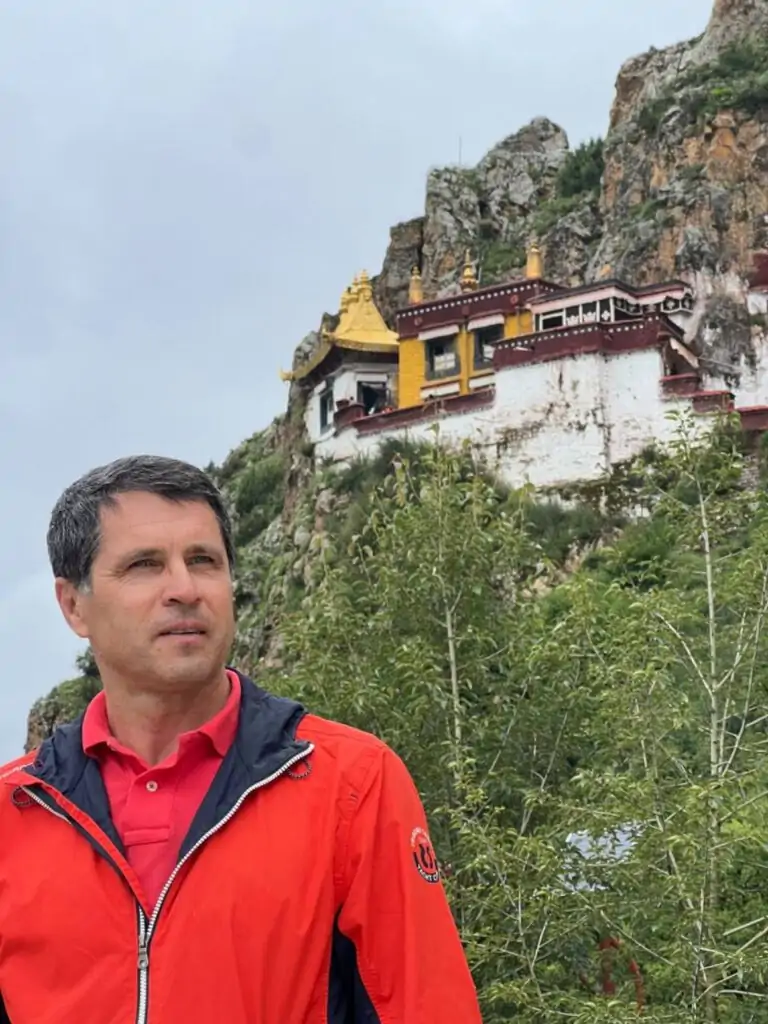
Drak Yerpa cave complex, is located 35 km from Lhasa (4885 m). It is also home to the Drak Yerpa Monastery, founded in the 12th century. It was here that the most famous teachers of Tibet – Guru Rinpoche (Padmasambhava) and Atisha, as well as the king of Tibet – Songtsen Gampo – spent years in meditation. The monastery was also the summer residence of the Gyuto Tantric College. It is one of the three most important monasteries of the Gelug lineage honoring Maitreya Buddha (Buddha of the Future).
Drak Yerpa Cave Complex
Prayer drums at Drak Yerpa.
Meditation at the Drak Yerpa Cave.
After lunch we will walk around the summer residence of the Dalai Lamas – Norbulinka Park. There used to be a healing spring in the place of the present Norbulinka Park. The 7th Dalai Lama Gesang Gyaltsu (1708-1757), who was characterized by poor health, came to bathe in the spring every year in summer. Thus was the beginning of the construction of the park. The park covers an area of 3600 thousand square meters. – It is the largest and highest artificial park in the world and is included in the UNESCO World Cultural Heritage List.
Overnight in a 4* hotel in Lhasa.
Walking around the summer residence of the Dalai Lamas – Norbulinka Park
Guided tour in Norbulinka Park
Day 4
May 26, 2026, Tuesday. Visit to the first Buddhist monastery in Tibet – Samye. Chimpu Monastery and Caves
Samye Monastery is the first and oldest Buddhist monastery in Tibet. It was founded by the legendary Guru Rinpoche (Padmasambhava). Samye Monastery is located on the northern bank of the Brahmaputra River. Built in the form of a mandala, it is the only structure of its kind in Tibet. In “A Short Biography of Padmasambhava” about Samye Monastery it says: “It was erected as a symbol of Mount Sumeru, surrounded by four large continents and eight small ones, the sun and the moon, and a wall of iron mountains”. The monastery has preserved relics related to Padmasambhava. During the founding of Samye Monastery, at the request of King Trisong Decena, Padmasambhava opened the mandala of Vajrayana teachings at the Chimpu Caves to 25 disciples, nine of whom attained siddhis through the sadhana practices he imparted to them.
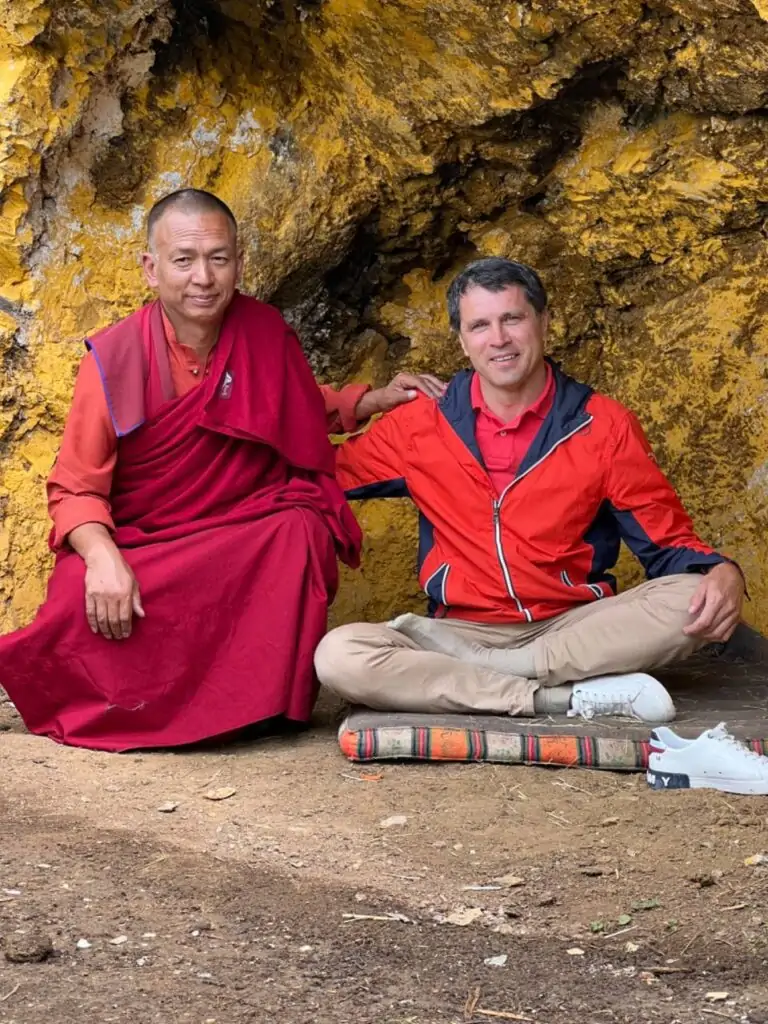
We will visit Samye Monastery, and if we are lucky – we will participate in a Buddhist puja (service) in the oldest monastery in Tibet, and receive a blessing from the Lama.
After lunch we will head higher up Mt. Chimpu, where there is a nunnery and retreat caves and hermit huts. Even today practitioners continue to hold retreats there. It will be possible to walk uphill to the caves, which offer scenic views of the valley. Here you can feel the spirit of Tibet, the antiquity of this land and its sacredness. Through contact with the outer silence, experience the silence of the inner silence.
Overnight in a 4* hotel in Lhasa.
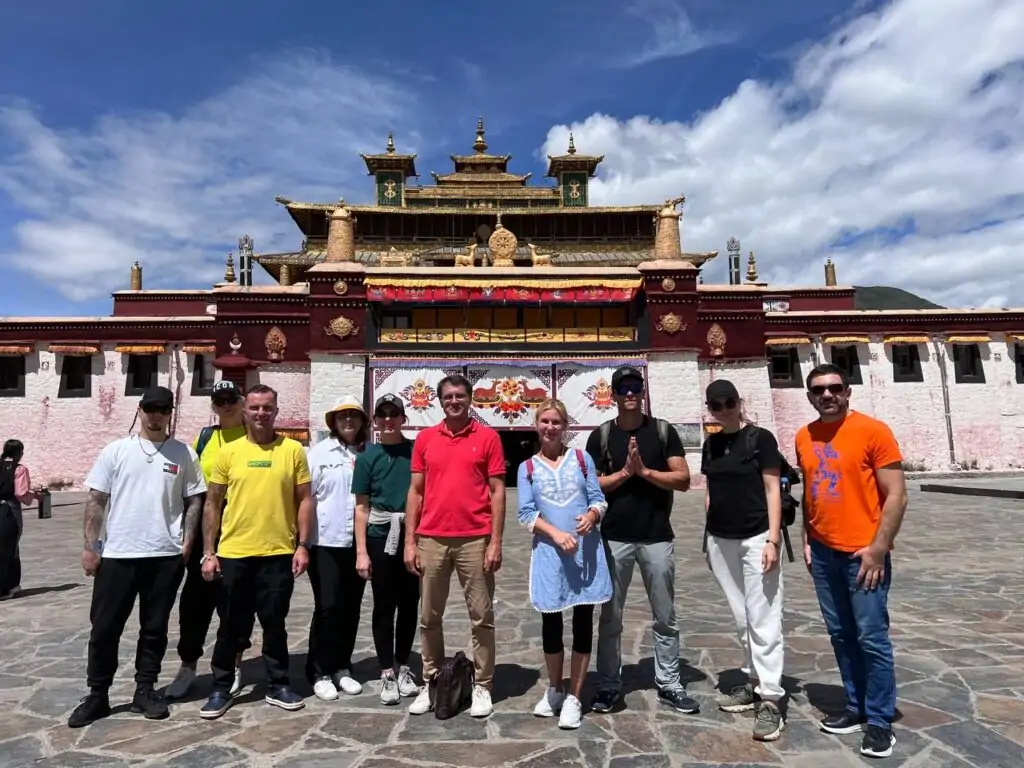
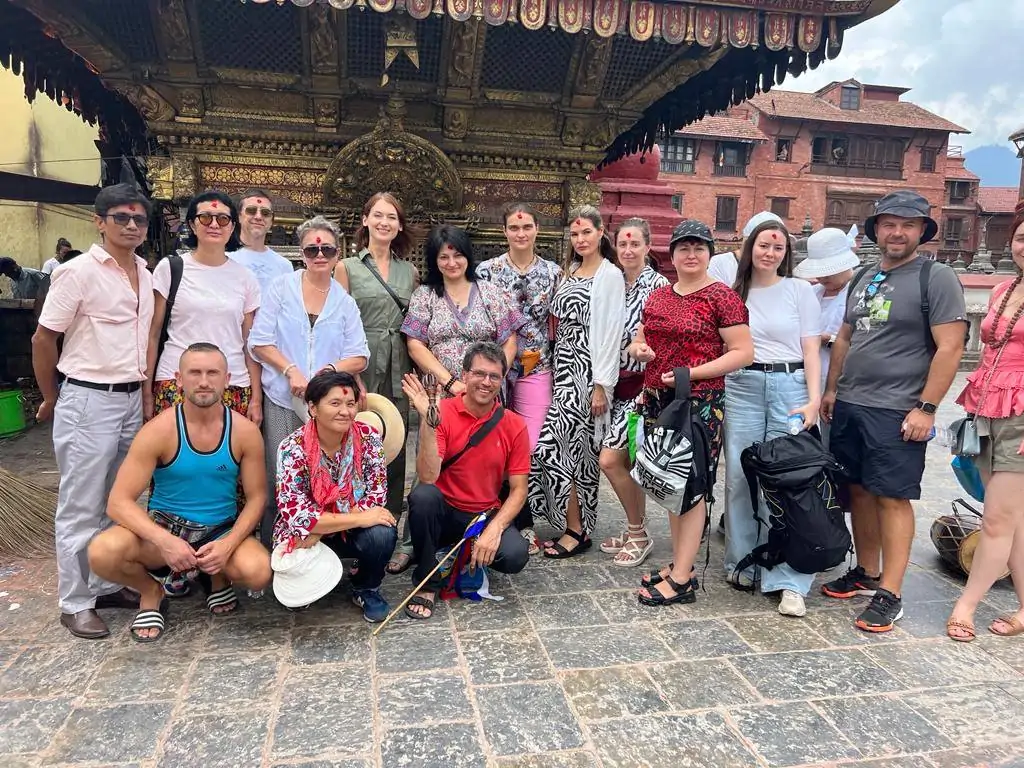
Tour participants at Samye Monastery
Samye Monastery
Picturesque views of the valley
Day 5
May 27, 2026, Wednesday. Transfer to Shigatze. The sacred lake of Yamdrok Tsho. Carola Glacier. Pelkhor Chode Monastery. Kumbum Stupa
Today we are going to drive on one of the most beautiful roads in the world! On the way we will see one of the three Great Lakes of Tibet Yamdrok Tso. The high-altitude lake is located at an altitude of 4,488 meters. It is known for its mystical properties, predictions and magic. Formerly a wealthy settlement strategically located at the confluence of several important trade routes. It is known for its mystical properties, predictions and magic. We will see the Karola Glacier and Lake Manak.
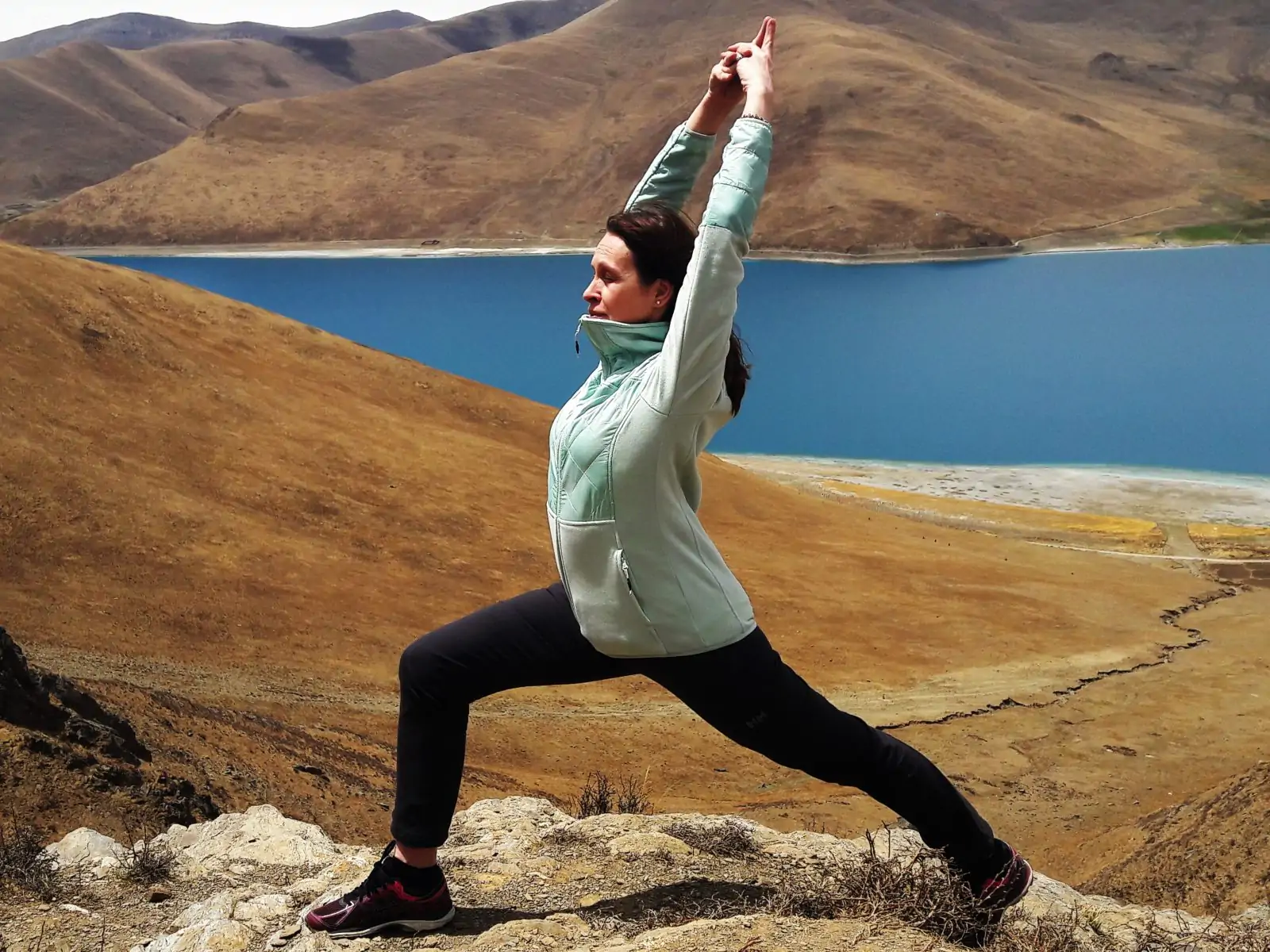
Yamdrok Tso Lake
Karola Glacier
Tour participants at Karola Glacier
On the way, in Gyantse, we will visit Pelkhor Chode Monastery. Pelkhor Chode Monastery was a complex of 15 monasteries of three different traditions, which in itself is a rarity in Tibetan Buddhism. 9 of the monasteries belonged to the Gelug school, 3 to the Sakya school and 3 to the small Bona tradition.
It is also home to the largest stupa in Central Tibet, Kumbum. It has five floors, many rooms, statues and altars. “Kumbum” means “thousand” as there are 1000 images of Buddhas, deities and bodhisattvas. As for the statues, most of them were damaged during the Chinese Cultural Revolution but have now been restored.
The largest stupa in Central Tibet is the Kumbum stupa
We will also see the outside of the ancient fort, built back in the 14th century. The fort is located in the center of the city and spectacularly crowns a rocky hill several hundred meters high. It was designed as a major defensive fortification on the road leading to Lhasa from the south. Numerous white stone buildings still make an impressive impression: high (5-8 m) and thick (up to 4 m) walls, powerful fortifications, massive buildings. It housed a garrison of 500 men in peacetime. We’ll visit a traditional barley mill.
Overnight in Shigatze in a 4* hotel.
Shigatze
Day 6
May 28, 2026, Thursday. Tashilunpo Monastery. Transfer from Shigatze to Everest Base Camp at an altitude of 5050m
In the morning after breakfast, we will visit Tashilunpo Monasterywhere the Panchen Lamas used to live in earlier centuries. The monastery, which belongs to the Gelugpa school, currently has about 800 monks studying. The tombs of all the Panchen Lamas and the 13th Dalai Lama are preserved on the temple complex. The main temple houses an ancient statue of the Future Buddha Maitreya, 26 meters high.
Monks at Tashilunpo Monastery
Statue of the Future Buddha Maitreya, 26 meters high
In the evening we will arrive at Everest base camp for an overnight stay. See Everest in the setting sun.
Overnight in EBCin a 3* hotel (rooms have a toilet but no shower).
Everest in the light of the setting sun
Day 7
May 29, 2026, Friday. Everest base camp – 5050 meters. Transfer to Saga
This morning we will see the first rays of dawn on the glistening ice-capped north face of the Top of the World – Jomolungma (8848m).
Mount Everest in Tibet is called “Jomolungma”, which translates to “Mother of the Universe”. You will see this mountain from the side of North Base Camp at about 5050 meters above sea level.
The walk at Everest base camp will be a good preparation for us for the kora.
In the afternoon we will be transferred to Saga. On the way we will see the beautiful Peiku Tso Lake and a view of another “smallest eight thousand meter peak” – Shishapangma (8021m). In addition, we will be accompanied by stunning views of the Main Himalayan Range almost all the way.
Overnight in a 3* hotel in Saga (4640 m)
Walking near Everest base camp
Tour participants in August 2024 at Everest Base Camp
Day 8
May 30, 2026, Saturday. Moving from Saga to Darcen
On the way, we will see a stunning view of the Saga Valley between the Gangdise and Himayala ranges. We will see beautiful meadows and local villages, drive over Mayomla Pass (5112m), see Naimonagni Mountain, drive past the sacredLake Manasarovar.
Overnight in a 4* hotel in Darcena.
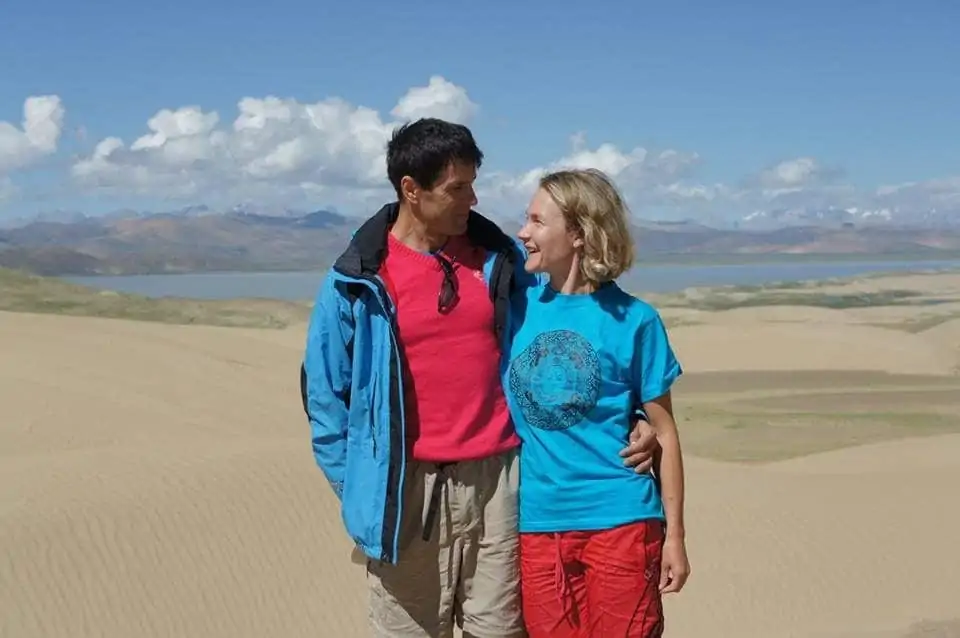
Elena at Lake Manasarovar
Lake Manasarovar and the mountains
Day 9
May 31, 2026, Sunday. The sacred lakes Manasarovar and Rakshastal. Bark around Lake Manasarovar. Visit to Chiu Monastery
After breakfast, transfer to Rakshastal Lake, the “demonic lake”. According to legend, a demon meditated for ten days near this very body of water. The ten-headed Ravana cut off one head every day and threw it to Shiva. When the demon had one, last head left, the god Shiva softened his anger and gave the petitioner the power he craved. There is another tale. According to legend, the demon meditated by the dead lake for ten days waiting for the coveted Parvati. But Shiva’s wife never lavished the unfortunate demon with her attention. She didn’t show up.
Lake Rakshastal is the “demon lake”.
Tour participants at Rakshastal Lake
After that we will drive to the sacred Lake Manasarovar and then do a kora around it by vehicle with stops for meditation, ablution and visits to monasteries.
Manasarovar (4557 meters) is a lake with “living water”! Here you can meditate on the shore of a lake overlooking Mount Kailash, and tune in for a 3-day mountain circumambulation (kora). Lake Manasarovar is mentioned in the Indian epic Ramayana. Hindus believe that Manasarovar is the soul of the god Brahma. Shiva and his wife Parvati are believed to have washed themselves here. Another legend says that Lake Manasarovar was the first earthly creation that Brahma created in his mind. Buddhists believe that Manasarovar is the legendary lake where the gods carried the Buddha after birth to wash him.
Vladimir Poda at Lake Manasarovar
Also today we will visit Chiu (“bird”) Monastery, which sits on either side of a cliff overlooking Lake Manasarovar. The monastery is built over the cave of Padmasambhava (Guru Rinpoche, the teacher who brought Buddhism to Tibet in the 8th century). The Precious Master spent three years in meditation in the cave and, according to one version, realized a rainbow body in it. It also houses a lifetime sculpture of Chomdente Buddha. Return to Darcen. Bark preparation.
Overnight in a 4* hotel in Darcena.
The statue of Padmasambhava at Chiu Monastery
Chiu MonasteryTour participants at Chiu Monastery overlooking Kailas
Day 10
June 1, 2026, Monday. The first day of the bark around Mt. Kailas. Full Moon.
Trekking 18 km. Ascent to an altitude of about 5000 m.
Itinerary:
Tarboche.
Chuku Gompa Monastery.
Lucky Stone House.
The western face of Kailasa.
Dirapuk Monastery.
The North Face of Kailas.
Tarboche is where the bark begins
Chuku Gompa Monastery
The beginning of the crust around KailashTour participant at the southwest face of Kailash
The spiritual meaning of the journey: On the first day of the kora, at the White Stupa, the symbolic new life of our soul begins. It is as if we are being born again, acquiring a new symbolic body.
Those who wish will be able to climb the plateau of Drachom Ngagye Durtryo, the burial place of 84 Mahasiddhas. Here, as legend has it, groups of those great Beings who are the Guardians on Earth of the Divine Plan for our planet and humanity gather. By what names we call these Beings is not so important.
Overnight at the guesthouse.
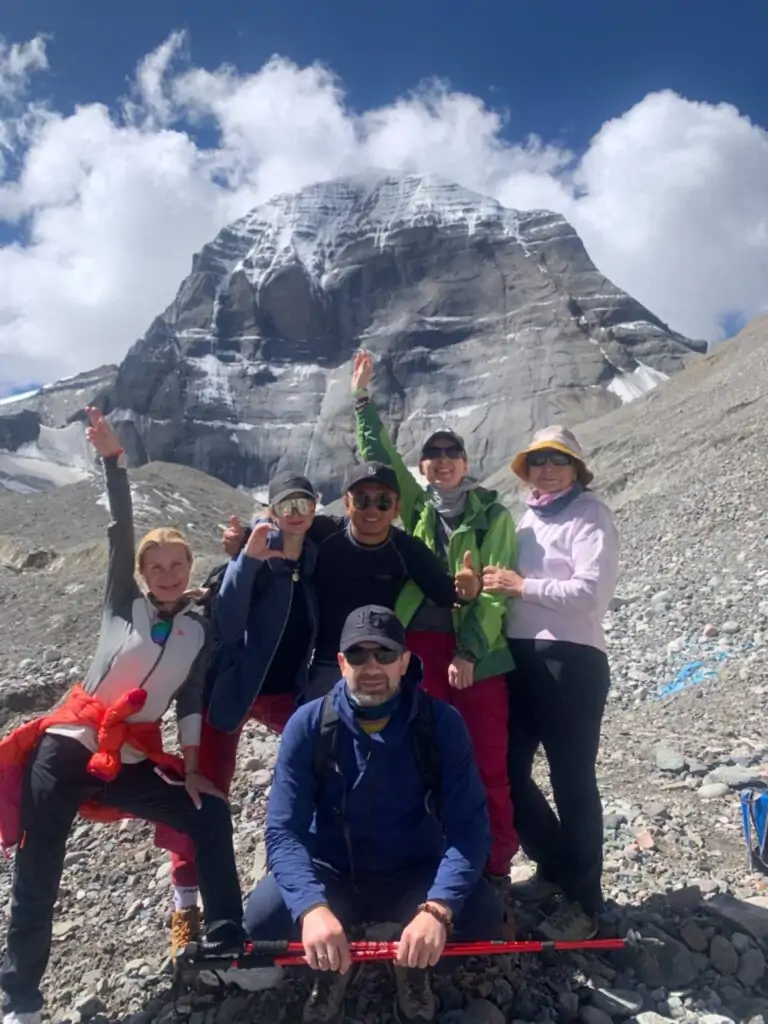
Tour participants at the North Face of Kailash on the first day of the kora
Day 11
June 2, 2026, Tuesday. Saga Dawa Festival. If possible, radial exit to the North Face of Mount Kailas
We walk about 4 hours one way and the same amount back, climbing to a height of 5400 m. Touching Kailas – the most powerful energy point of the planet with reference vibrations.
The North Face of Kailas
Vladimir Poda and tour participants at the North Face of Kailas
Those who wish will be able to visit the active Dhrirapuk Monastery. There’s supposed to be a puja on that day.
Dirapuk Monastery at an altitude of 4850 m
Overnight at the guesthouse.
View from Dirapuk MonasteryThe North Face of KailasBy the North Face of Kailas
Day 12
June 3, 2026, Wednesday. Day 2 of the bark around Kailas
The way is 22 km. The trek takes 7-11 h. Ascent to the height of 5630 m.
Itinerary:
Dirapuk Monastery, past Death Valley.
Shivatsal Cemetery.
Green Tare Pass.
Lake Gaurikund.
Axe of karma.
Zutulpuk Monastery.
The spiritual meaning of the journey: On the second day of the kora, our soul lives through symbolic maturity, old age, death, bardo (the intermediate stage between death and birth) and new birth. This day is hard physically. The path of the second day starts from Dhirapuk Monastery at an altitude of 5000 meters.
After Shivatsal Cemetery till the top of Green Tara Pass, symbolically our soul resides in the state of bardo. The top of the pass is a place of celebration, a long-awaited symbolic new birth takes place here.
From the top of the pass one can see the Karma Axe. The Karma Axe finally “cuts off” the old karma and one feels the beginning of a new life.
Overnight at the guesthouse.
Vladimir Poda on the Zelenaya Tara Pass at 5600 m
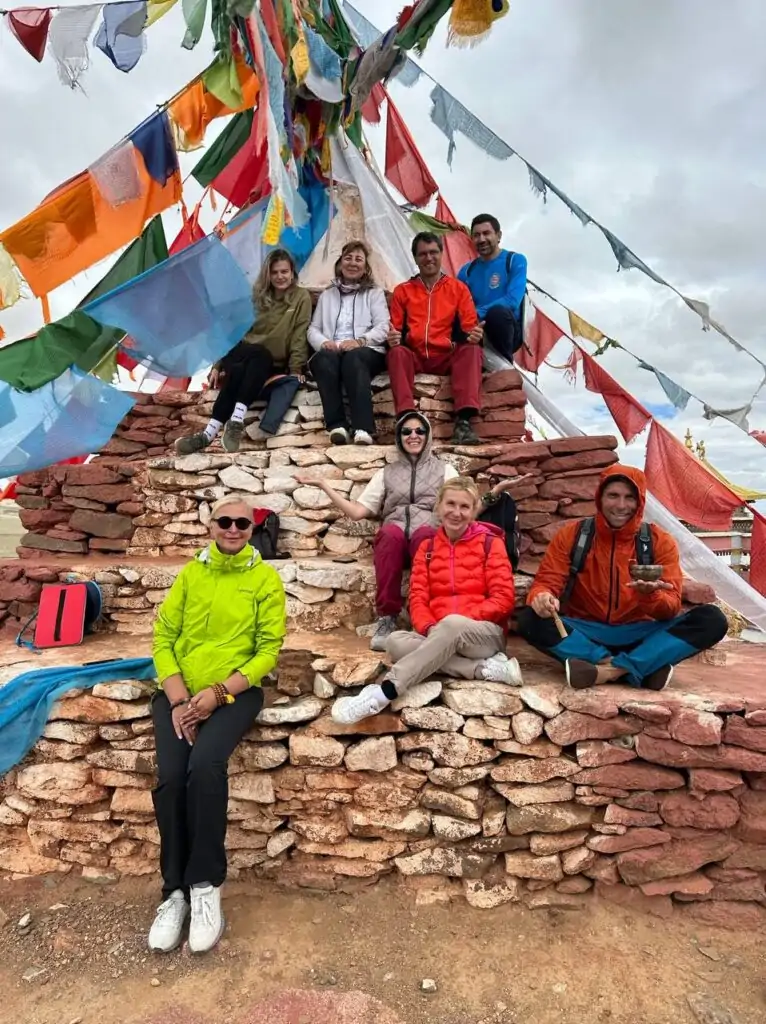
Flagging at Green Tara Pass
Green Tara Lake at Drolma La Pass
The Axe of KarmaZutulpuk Monastery
Day 13
June 4, 2026, Thursday. Friday. Day 3 of the bark around Kailas
The path is 12 km, the crossing is easy and beautiful, takes 3-4 hours.
Return to the hotel in Darcena, lunch.
The transition to day 3 takes 3-4 h
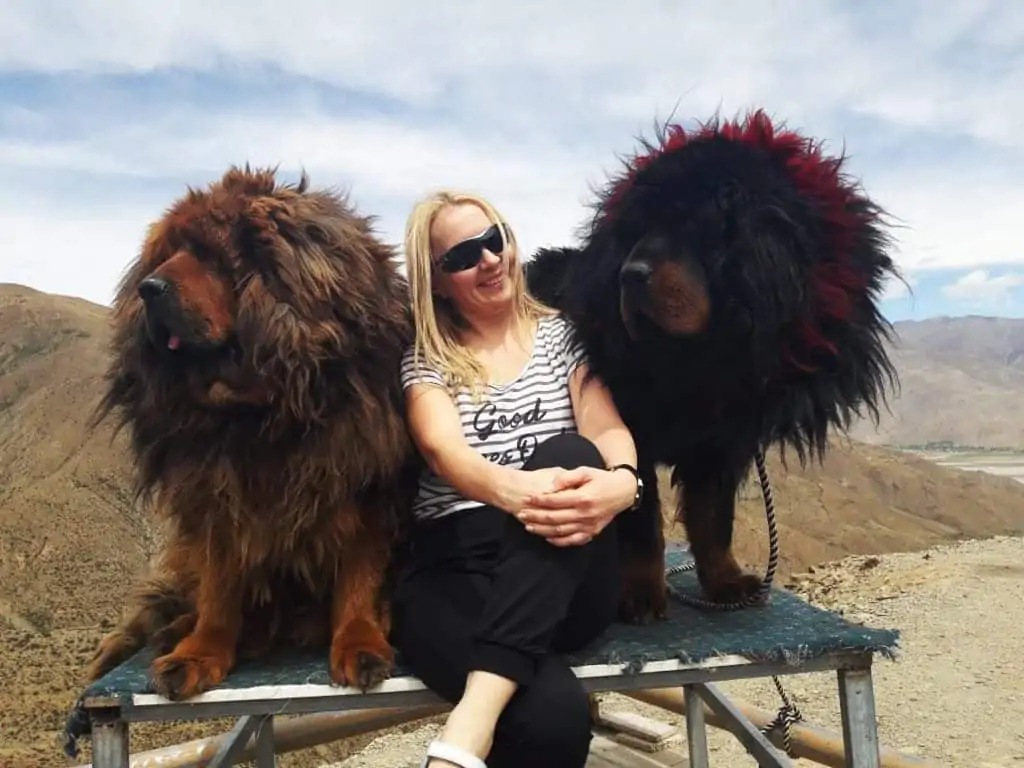
Local Tibetans on the barkTibetan yaks
An easy and beautiful path to Darcen
Local Tibetans on the bark
If you wish, you can go to Sarlung Monastery to see and meditate on the South Face of Kailas, from where the journey to the Inner Kora (Nandi Kora) begins.
This is a unique opportunity to see the South Face of Kailas up close and visit the place where the inner bark – Nandi bark – begins. The inner bark is the circumambulation of Mount Nandi adjacent to the South Face of Kailas. Buddhists and Hindus only do the inner kora if they have previously undergone the 13 outer koras. In addition, the route of the inner crust is technically difficult, some sections are very steep, slippery, the danger of rockfalls is not excluded. This may be why access to the inner crust is now closed by the Tibetan authorities.
On our trip, we will organize a field trip to the South Face of Kailas after passing the outer crust for those who wish to do so! This is another additional opportunity to be in the energies of Mt. Kailas. It will be possible to meditate with a view of the South Face of the mountain.
Overnight in a 4* hotel in Darcena.
The southern face of Kailas
The southern face of Kailas
Dayь 14 Transfer from Darcen to Garuda Valley and in the evening to Zanda
Today we will visit the capital of the ancient kingdom of Shanshung, the Garuda Valley, where the pre-Buddhist spiritual teachings of Bon existed. It is believed that Shambhala was once manifested here, on a physical level.
Garuda Valley
Shanshung Ancient Kingdom – Garuda Valley
Now the Garuda Valley is an immense cave complex. A whole city cut into the mountains. Exploring the caves is so exciting that you want to go deeper and deeper, climb higher and higher.
A city, in the Garuda Valley, cut into the mountains.
Vladimir Poda
We will see a beautiful working hot spring in the Garuda Valley, which is credited with rejuvenating properties. Those who wish can bathe in it right in the lap of nature. Lots of stunningly beautiful mineral stones everywhere.
Transfer to Zanda.
Overnight in a 3-4* hotel.
The capital of the ancient kingdom of Shangshung – Garuda Valley
Day 15
June 6, 2026, Saturday. Transfer from Zanda to Ali airport. Flight to Lhasa. Airport transfer to the hotel
Visit to the Center of Tibetan Culture (optional) with master classes on Thangka painting (Tibetan icon painting), calligraphy, making Lungta – prayer flags, incense making, etc.
Training takes place in the center of historical Lhasa in the house of our good friend. He is a 5th generation native of Lhasa.
Their whole family is typical representatives of the Tibetan people, living according to all the rules and traditions. They are trained by experts in their art.
Picturesque stops on the way to Lhasa
Free time to walk around Lhasa, evening shopping.
Overnight in a 4* hotel in Lhasa.
Evening Lhasa
Day 16
June 7, 2026, Sunday. Lhasa Walking Tour. Group transfer to Lhasa airport
Free time in Lhasa. Transfer to Lhasa airport. The flight home.
Free time in Lhasa
Farewell to the group and departure to the airport
.
Cost of travel
From
$3100
The COST of the tour for 2026 does NOT depend on the number of people in the group and is:
When booking:
Before December 1, 2025 – $3,500
Before February 1, 2026 – $3,700
After February 1, 2026 – $3,900.
Payment in installments is possible. For regular customers there is an accumulative system of discounts.
For group bookings, the cost of the tour is $3,100. The group leader assembles his/her own group. Detailed offer for group-leaders see on reference
The price of the tour includes:
Permits (permits to stay in Tibet).
All transfers on a comfortable tour bus for our group.
Accommodation in 4* hotels (Lhasa, Shigatze, Dharchhen), 3* (Saga – 1 night) in double rooms and guest houses (during the bark around Kailas, 3 nights).
Breakfasts at hotels (at gesthouses 3 breakfasts are not included).
Excursions according to the program, all entrance fees.
Yaks and chasseurs during the bark or porters (to carry your belongings during the bark).
Accompanying the group by two experienced facilitators –experienced Tibetan guide and group leader Natalia Doshchanova.
Drinking water.
Oxygen canisters.
Sleeping bags and walking poles (optional).
The tour price does NOT include:
Air travel to and from Lhasa.
Airfare domestic from Ali to Lhasa is $500.
Lunches and dinners.
Horse services during the bark – if you can’t go yourself (if you need them, you usually don’t – participants’ belongings will be carried by yaks or porters – they are included in the tour price).
The cost of a horse for 1 day of bark is approximately $100.
Entry tourist visa to China (to be arranged in advance). Citizens of Russia, Belarus, Kazakhstan and some others do not need a visa.
Health Insurance.
Single (single) room supplement is optional, $800.
Tip to the driver, Tibetan guide.
Program items specified “optional”: the theatrical show “Princess Vinchen”, photo shoot, visit to the Tibetan Culture Center, departure to the South Face of Mount Kailas after the bark.
Мы используем cookie-файлы для наилучшего представления нашего сайта. Продолжая использовать этот сайт, вы соглашаетесь с использованием cookie-файлов.